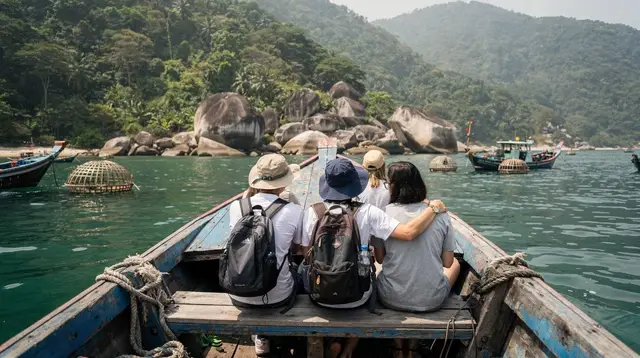
Phu Quoc Island Hopping and Snorkeling: A Realistic Guide to Days at Sea
When is the best time for island hopping and snorkeling on Phu Quoc?
Roughly November to April, when the Gulf of Thailand is calmest and the skies are mostly dry. In the wet season, roughly May to November, the west coast is rough and boats may be delayed or cancelled. Visibility under water varies from day to day, so treat any snorkeling stop as a pleasant bonus rather than a guarantee.
Choosing a day at sea around Phu Quoc
A day on the water is one of the easiest ways to see a different side of Phu Quoc. The island itself is covered on its destination page and in the island tours guide; this page is about the boat trips, the small islands off the coast, and the snorkeling stops that come with them. It is written for people who want to understand what they are booking before they pay, not for people who want a sales pitch.
Phu Quoc is Vietnam’s largest island, and it sits in the Gulf of Thailand, off the Cambodian coast, not in the South China Sea. That detail is more than trivia. It explains why the sea season here does not follow the pattern of the central coast, and why a calm day at Phu Quoc can coincide with a storm-lashed week at Hoi An. If you are comparing destinations, our guides to Phu Quoc or Nha Trang and Phu Quoc or Con Dao put the islands side by side.
Island hopping on Phu Quoc is a loose term. It usually means a boat leaves from the south of the island, calls at several small islets with a beach or a reef, lets you swim and snorkel, serves a meal, and returns in the afternoon. Beyond that the details vary a lot between operators, which is exactly why a little homework pays off.
Know the sea: when conditions are best
The best season for the sea around Phu Quoc runs roughly from November to April. In those months the weather is mostly dry, winds are lighter, and the water is generally calmer. The hottest and most humid stretch, March to April, is still a good time to be on a boat, since the breeze and a swim are welcome.
From roughly May to November the island is in its wet season. Rain usually arrives in short, heavy bursts, often in the afternoon, but the more important point for boat trips is the sea state: the west coast is rough and swells can make crossings uncomfortable. Boats may leave late, take a different route or not run at all. That is not a failure of the operator, it is the sea doing what it does.
A few practical consequences follow:
- Shoulder months are a gamble in both directions. Early November and late April can be lovely or unsettled. Keep your schedule flexible.
- Wet season does not mean a wasted trip. Mornings can be fine, and some visitors enjoy the quieter beaches and lower crowds. Just do not plan your whole holiday around a single boat day.
- The rest of the country follows different rules. The north, centre and south each have their own pattern, and our best time to visit Vietnam guide and the page on the rainy season and typhoons explain how they fit together.
If your dates fall in the wet season, you are not obliged to cancel. You are obliged to book smartly: pick a day early in your stay, read the cancellation terms, and accept that the crew’s decision about the sea is final.
Types of trip you will see
Most listings fall into a handful of formats. Here is how to read them without relying on marketing language.
| Format | What it generally means | Best for |
|---|---|---|
| Shared boat tour | A larger boat, a group of mixed travellers, scheduled stops at islets | Social travellers, families, first-timers |
| Speedboat tour | Faster, smaller vessel, sometimes with a tighter stop list | People short on time or prone to boredom |
| Private charter | The boat and crew are yours for the day, route set with the crew | Couples, small groups, photographers |
| Southern islands loop | Focus on the An Thoi archipelago at the island’s southern tip | Beach and snorkeling priority |
| Combination trip | Islands plus another attraction such as a cable car or water park | Mixed-interest groups, families |
| Sea walking | Helmet-style diving experience on the seabed, no swimming skill needed | Non-swimmers who still want to see fish |
A broad shared option such as this island hopping and snorkeling boat tour is the simplest way to sample the format. A trip built around several stops, like the three-island snorkeling day trip, gives you a clearer sense of how a day is structured, and a private speedboat tour hands control of the pace to your own group.
Check the exact departure point, the islands listed and what is included on each listing page, because these details differ from one product to the next and change from season to season.
The southern islets: what to expect
Much of the island hopping around Phu Quoc concentrates on the small islands off An Thoi at the island’s southern end. Names you will see in itineraries include Hon Thom, Hon Mong Tay, Hon Gam Ghi and Hon May Rut, though which of them a given boat visits depends on the day, the sea and the operator. Treat the names as a guide to the area rather than a promise.
These stops tend to share a common rhythm: a short boat hop, a beach with a few shacks or a quiet cove, a swim or snorkel, then back on board. Some are busier than others, particularly the ones with beach clubs or easy landing spots, and the quietest sand is usually the one that is hardest to reach. If a peaceful beach matters to you, ask the operator which islets they actually call at and whether they avoid the midday rush.
For a local-flavoured option, the southern islands speedboat tour with lunch concentrates on this area. Whatever you choose, remember that the island’s mainland beaches are a different subject, covered on the Phu Quoc things to do page and in our wider best beaches in Vietnam guide.
Snorkeling: honest expectations on visibility
Snorkeling is the part of the day that people most often over-imagine. It is worth saying plainly: underwater visibility around Phu Quoc is variable, and no operator can guarantee it. It depends on wind, swell, tides, recent rain, the number of boats stirring the water and the exact site.
What you can reasonably expect:
- Some fish and some coral. Many sites have shallow reefs, rocks and seagrass with reef fish, urchins and the occasional more colourful species. The experience is pleasant rather than spectacular.
- Variable clarity. On a calm dry-season morning the water can be clear enough to enjoy the view. After wind or rain it may be cloudy, and the same spot can feel quite different on two consecutive days.
- Reefs that have seen traffic. Popular stops host many visitors, and coral near easy landing points tends to be less lively than the marketing photos suggest.
- Little in the way of big marine life. Do not book expecting turtles, rays or large pelagics. If they appear, enjoy them, but they are luck, not an inclusion.
If you are comparing places specifically for snorkeling, it helps to know that other Vietnamese destinations run similar trips with their own character. See Nha Trang island hopping and snorkeling and Cham Islands snorkeling tours if you are weighing your options across the country.
For non-swimmers or nervous travellers, the sea walking experience offers a way to see the seabed without swimming skill. It is a guided activity with its own safety briefing, so ask about age and health limits when you book.
What to check before you book
You do not need a long list, just a few firm questions. Most good operators will answer them without fuss.
Sea conditions and cancellation
Ask what happens if the sea is rough. Is the trip rescheduled, refunded or simply cancelled? Who decides, and when are you told? In the wet season it is wise to book a day with slack on either side, and to look for a flexible cancellation policy. A decent operator would rather move you than put you on a boat that should not leave the harbour.
Equipment provided
Confirm what is supplied: mask, snorkel, life jacket, fins, towel, drinking water. Do not assume fins are included. If you wear a prescription mask or have a small child, ask about sizes. Bringing your own mask and snorkel is perfectly reasonable and often more comfortable.
Boat size and type
Boat size affects comfort, noise and how crowded each stop feels. A larger vessel is usually steadier in a swell and has more shade and toilets, while a speedboat is faster and more exciting but can be bumpy and wet. If you are prone to motion sickness, think carefully about which end of the spectrum suits you, and take a remedy in advance rather than after the first wave.
Group size and itinerary
Find out roughly how many guests are on the boat and which islands are on the list. A very full boat means shared snorkeling spots and queues for the ladder, while a smaller group gives you more time in the water. Do not rely on a fixed number in a listing, and do not expect the stop order to be sacred, since the crew may change it to suit the sea.
Food, drink and extras
Lunch is often included, but dietary needs deserve a quick message in advance. Ask whether drinking water is provided, whether there are extra fees at beach stops, and whether alcohol is sold on board. Cash is handy for small purchases on the islets, even on a trip that is otherwise prepaid.
Safety and insurance
Look for life jackets for every passenger, including children, and a crew that gives a short safety briefing. Check that your travel insurance covers water activities and boat trips; see our travel insurance guide for what to look for. For general reassurance on risks, is Vietnam safe puts the real hazards in perspective.
Combination trips and add-ons
Some listings pair the islands with something else. The four-island speedboat trip with a cable car and water park is a good example: more happens in the day, but there is less time at each stop. If your priority is quiet snorkeling, a more focused trip will almost always serve you better than a packed multi-attraction itinerary.
Families sometimes prefer the packed version because it keeps children entertained, and that is a legitimate choice. Our guide to theme parks and the cable car on Phu Quoc covers those attractions in their own right, so you can decide whether to bundle them or keep them separate.
Evening shows and sunset ticketed experiences also appear in the listings. They are land-based and quite different from a day at sea, so we leave them to the island’s destination page rather than mixing them into this guide.
A realistic sample day
No two operators run exactly the same schedule, so treat this as a typical shape rather than a timetable.
- Morning pick-up or meeting point. Hotels in the main resort areas are often covered by transfers, but confirm your pick-up time and place the evening before.
- Boat departure. The crew gives a short briefing and hands out life jackets and snorkeling gear.
- First stop. Usually a swim or snorkel near a reef or rocky shore, when the water is calmest and the light is best.
- Lunch. On board or at a beach stop, often seafood or simple rice dishes.
- Beach time. A second or third islet for swimming, sand and photos.
- Return. A leisurely run back, with the afternoon wind sometimes making the last leg bumpier than the first.
Because duration and exact stops vary, check the listing for the operator’s own timings and plan the rest of your day loosely. Booking something fixed in the evening is unwise on a sea-dependent day.
What to bring
- Reef-safe sun cream, a hat and a long-sleeved rash top: the sun on the water is stronger than it feels.
- A dry bag or waterproof pouch for your phone and valuables.
- Water shoes or sandals with a strap, since some landings are rocky.
- A light layer for the return trip, because wet skin and a breeze can feel cool.
- Cash in small notes for small purchases ashore.
- Motion-sickness tablets if you are susceptible.
For a wider list that fits the whole country, see our Vietnam packing list. Please avoid touching coral, standing on reefs or feeding fish, which damages the very thing you came to see.
Booking tips that save headaches
Book a few days ahead in the dry season, particularly around holidays, and earlier if you want a private boat. Keep your first full day on the island free, so a postponement does not wreck your plans. If a trip is cancelled for weather, you want to be able to move it, not lose it.
Read reviews with a sense of proportion. A complaint about cloudy water on a windy day tells you about the weather, not the operator. Complaints about overcrowding, missing life jackets or unfulfilled inclusions are more informative.
Finally, remember the bigger picture. Phu Quoc is a laid-back island with plenty to do on dry land, and a boat day is one part of a stay rather than the whole of it. Our blog post is Phu Quoc worth visiting offers an honest overview, and the South Vietnam region page shows how the island fits into a longer trip.
Phu Quoc island hopping and snorkeling: frequently asked questions
Is Phu Quoc in the South China Sea?
No. Phu Quoc lies in the Gulf of Thailand, off the Cambodian coast. That is why its sea season differs from the central coast: the best conditions run roughly from November to April, and the west coast is rough in the wet season.
What is the best month to go snorkeling on Phu Quoc?
There is no single perfect month, but the dry season, roughly November to April, offers the calmest water and the best chance of clear conditions. Visibility still changes with wind, tides and recent rain, so keep expectations modest.
Do I need to be a strong swimmer to join an island-hopping tour?
Most tours provide life jackets and let you stay near the boat, so a confident swimmer is not strictly required. Always tell the crew how comfortable you are in the water, and ask what flotation is provided before you book.
Is snorkeling equipment included?
It varies by operator. Mask, snorkel and life jacket are commonly supplied, but fins, rash vests or underwater cameras may not be. Check the inclusions on the booking page and ask about sizes for children.
Will the tour run if the sea is rough?
Operators can reroute, shorten or cancel a trip when conditions are poor, especially on the west coast in the wet season. Ask about the cancellation or rescheduling policy before you pay, and keep a spare day in your plan.
Should I choose a big boat or a small speedboat?
Larger boats tend to be steadier and more social, while speedboats are quicker and suit smaller groups but can feel bumpy in a chop. Choose according to your tolerance for motion, the sea forecast and the size of your party.
Islands and Snorkeling Trips
Verified deep-linked GetYourGuide tours. Book through these links and we earn a small commission at no cost to you.
GetYourGuide does not provide a product photo for this activity — the image shows the meeting point, photographed by us.