My Son Sanctuary from Hoi An: A Practical Guide to Vietnam's Cham Temple Ruins
Is My Son Sanctuary worth visiting from Hoi An?
Yes, if you enjoy history and atmosphere more than spectacle. My Son is a UNESCO-listed (1999) Cham Hindu temple site in a forested valley about 40 km inland from Hoi An, and it is Cham, not Khmer. Expect weathered brick towers rather than intact monuments, and plan a half day including the road.
My Son is the best place in Vietnam to meet the Cham, the people of the kingdom of Champa, who ruled much of the central coast for well over a thousand years before the Vietnamese took the region. The sanctuary sits in a green valley roughly 40 km inland from Hoi An, and it was inscribed on the UNESCO World Heritage list in 1999, the same year as Hoi An’s old town. Most visitors reach it as a half-day trip from Hoi An or Da Nang, and it rewards the ones who arrive with the right expectations.
This guide covers who the visit suits, what you will actually see, and how to fit it around a day in Hoi An. It deliberately does not quote opening hours or ticket prices, because both change and a wrong number is worse than none.
What My Son actually is
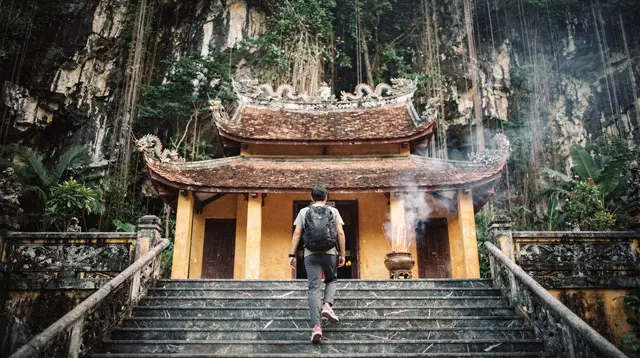
My Son is a cluster of Hindu temples built by the Champa kings between roughly the fourth and the thirteenth centuries. The temples were built to honour Hindu deities, above all Shiva, and to link the ruling dynasty with the god. In practice that means a temple-tower complex in a bowl of jungle-covered hills, with the towers grouped in clearings and each group given a letter by the archaeologists who surveyed the site in the early twentieth century.
It is Cham, not Khmer. This is the single most common misunderstanding. Visitors who have seen photos of Angkor in Cambodia often assume that any Hindu ruin in Southeast Asia is Khmer. It is not. The Khmer empire and Champa were neighbours and sometimes enemies, with different architecture, different sculpture and a different history. Cham towers are built mainly of fired brick, tall and narrow, with sandstone details; the Khmer favoured sandstone and laterite on a far grander scale. Today, Cham communities live on in the south-central part of Vietnam, and Cham towers also survive elsewhere on the coast, notably Po Nagar at Nha Trang.
The site served as a religious centre, and a place where kings were consecrated and honoured, for centuries. It then faded as Champa itself declined, and the forest took the valley back. Scholars rediscovered it in the late nineteenth century. Part of it was badly damaged by bombing during the war in the late 1960s, which is why some of the clearings are mostly rubble and craters, and why the restoration you see in other groups was needed in the first place.
Who the visit is for
My Son is a good choice if you:
- like history, archaeology or religious architecture, and are happy to read a little or listen to a guide;
- want a quieter, more atmospheric counterpart to the lanterns and cafés of Hoi An;
- are comfortable walking on uneven paths in heat and humidity;
- have the patience to look closely at weathered carving instead of expecting grand set pieces.
It is a weaker choice if you:
- want imposing, intact monuments in the manner of Angkor, Bagan or Borobudur;
- travel with very young children who will struggle in the heat and on dirt paths;
- have only a day or two in Hoi An and would rather spend them in the old town, on the river or at the beach.
Be honest with yourself about that last point. Hoi An itself is the main attraction of the area, and My Son is an add-on that makes sense when you have time. If you are weighing it against other outings, the page on day trips from Hoi An and Da Nang compares the full list so this guide can stay focused on one place.
What to expect on the ground
Think of My Son as brick ruins in a forest. Several towers still stand, some with fine detail and some with walls that survive only in part. Between them you will see fallen lintels, carved stone pedestals, bases of lingam and yoni, which are the abstract symbols of Shiva, and remnants of sculpted figures. The brick itself is the star: Cham builders achieved a joinery so tight that it is still debated how they did it.
A few practical impressions:
- The site is spread out, but not enormous. You walk between groups of buildings along shaded paths, and the visit is a stroll, not a trek.
- Signage is limited. A guide transforms the experience here. Without one, the ruins can look like piles of brick; with one, you can read the layout of a temple, the role of the main tower, the gateway and the subsidiary shrines.
- Some areas are damaged or roped off, and parts of the site are closed for conservation work at various times. Do not expect to see every group.
- There is little shelter from sun in the clearings. Bring water, a hat and sun protection, and wear shoes with grip.
- Tap water is not drinkable in Vietnam, so carry sealed bottled or filtered water.
- A short cultural performance is sometimes offered on site, depending on the day and the operator. Treat it as a pleasant extra, not a reason to go, and ask when you book.
Temple etiquette applies as it does elsewhere: dress modestly, do not climb on the structures, do not touch carvings, and stay behind any ropes. The Vietnam etiquette and customs guide covers the general rules that also apply here.
Getting there from Hoi An
The honest figures are these. My Son is about 40 km inland from Hoi An, and by road the trip typically takes an hour to an hour and a half each way, depending on traffic, the weather and where you are picked up. From Da Nang it is a little longer. The road itself is unremarkable, though the final stretch narrows as it enters the valley.
You have three realistic options:
- An organised tour. This is the simplest and usually the best choice. Transport, a guide and the entry arrangements are handled for you, and you are back in Hoi An by midday or early afternoon.
- A private car with a driver. Useful for families or small groups who want to leave at their own pace, or to combine the sanctuary with a stop elsewhere along the way.
- A self-ride motorbike. Possible, but it is the option with the most downside. Riding in Vietnam without the correct licence can void travel insurance, and traffic around Da Nang and Hoi An is busy. If you want a more independent trip, a car with driver is safer.
For a general view of how transport works across the region, the Da Nang airport transfers guide is useful if you are flying in and out and want to link the trip with your arrival or departure.
Choosing a tour
Several kinds of organised trip run from Hoi An, and they differ mainly in how you travel and what else they include.
- A standard guided half-day tour is the best default for most visitors. For example, this guided tour covering My Son Sanctuary and Hoi An pairs the temple site with time in the old town.
- Electric-car and cycling options suit visitors who want a gentler or more active way to travel, and who would like a countryside element before or after the ruins. A half-day trip that combines the sanctuary with a bike ride is one example.
- Tours that add a boat ride on the Thu Bon river give you the sanctuary in the morning and the river in the afternoon, so the day feels less like a single stop.
- Language-specific tours, including some with a Spanish-speaking guide, exist if English is not your first language. Ask the operator exactly which language the commentary will be in.
When comparing offers, check what is included (transport, guide, entry, water, lunch), the group size, the pick-up time and the language. Prices vary by operator and season, so I have left them out.
How to combine My Son with Hoi An
The classic pattern is simple: My Son in the morning, Hoi An in the afternoon. You leave early, see the ruins before the heat builds, return for a late lunch, and spend the afternoon and evening in the old town. It works because the sanctuary is at its most pleasant early in the day, and because Hoi An is at its best when the light softens and the lanterns come on.
A few ways to shape the day:
- Pair it with a slow afternoon. After the heat and the road, a long lunch, a swim at the beach and a stroll through the old town is a better plan than another sightseeing stop. The Hoi An city tours guide lists the options for the old town itself.
- Pair it with the river. If you prefer water to walking, add a boat or cycling trip around the delta channels in the late afternoon. The Hoi An ancient town and My Son tours page covers combination trips directly.
- Keep the evening free. The lantern-lit old town is worth seeing at night, and the Hoi An old town guide on destinations has more on how to spend it.
If you are staying in Da Nang rather than Hoi An, the same morning trip works and is only slightly longer. The comparison between the two bases is covered in Hoi An or Da Nang, and you can read about the larger city in the Da Nang destination page.
When to go
Central Vietnam has its own pattern, distinct from the north and the south:
| Period | What to expect |
|---|---|
| Roughly February to August | Hot and mostly dry. Early starts matter, and the clearings have little shade. |
| Roughly September to December | Rainy season. Typhoons and floods are most likely in October and November, and paths can be slippery. |
In the wet months, check the forecast and confirm with your operator the day before. Road conditions and site access can change quickly after heavy rain. The rainy season and typhoons guide explains the pattern for the whole country, and the central Vietnam typhoon article goes deeper on the coast.
What to bring
- Sealed bottled water, more than you think you need.
- A hat, sunglasses and sun cream.
- Closed shoes with grip, since paths are uneven and can be damp.
- Light, breathable clothing that covers shoulders and knees.
- A little cash for small purchases, and insect repellent in the forest clearings.
For the wider kit list, see the Vietnam packing list.
How My Son fits among Vietnam’s heritage sites
My Son is one of eight UNESCO World Heritage listings covered by this site, and the only one dedicated to Cham culture. Its neighbours in the central region are very different in character: Hue’s imperial monuments belong to the Nguyen dynasty, and Hoi An’s old town is a preserved trading port. Together they tell a layered story of the coast. If you want to see how the sites relate, the UNESCO sites in Vietnam guide lays out the full list, and the temples and heritage category collects heritage outings across the country.
My Son at a glance
| Question | Short answer |
|---|---|
| Who built it? | The Cham, kings of Champa |
| Religion | Hindu, mainly dedicated to Shiva |
| UNESCO status | World Heritage Site, inscribed 1999 |
| Distance from Hoi An | Roughly 40 km inland |
| Typical journey | About an hour to an hour and a half each way |
| Style | Brick towers and ruins in forest |
| Best for | History lovers, quiet-minded travellers |
| Time to allow | Half a day including transport |
Frequently asked questions about visiting My Son Sanctuary
Is My Son Sanctuary Khmer or Cham?
It is Cham. The temples were built by the kings of Champa, a Hindu-influenced kingdom of the central Vietnamese coast, and are dedicated mainly to Shiva. The Khmer built Angkor in Cambodia, which is a separate civilisation with its own, much larger monuments.
How far is My Son from Hoi An and how long does the trip take?
My Son is roughly 40 km inland, and the drive is typically an hour to an hour and a half each way depending on traffic and where you start. With the visit itself, most organised trips take a half day, and combined trips run longer.
Is My Son worth it if I have already seen Angkor?
It is a different experience, so go with the right expectations. My Son is smaller, more ruined and far quieter, and its interest lies in being the main surviving Cham religious site in Vietnam rather than in scale.
Can I visit My Son independently, or do I need a tour?
Both work. A guided tour handles transport and explains the ruins, which have little signage worth the name. Independent visitors can hire a car with driver or ride a motorbike, but should only do so with the correct licence and insurance.
What is the best time of year to visit My Son?
The central coast is hottest and driest from roughly February to August, and the rainy season runs roughly September to December, with storms and floods most likely in October and November. Whatever the month, an early start is kinder on the heat.
Do I need to check opening times and entry fees before going?
Yes. Opening hours, ticket prices and any evening or performance programmes change, so confirm them with your tour operator or the official site operator close to your date rather than relying on a guide.
If the sanctuary appeals but your time is short, a combined trip such as this guided tour with a boat ride on the river is a compact way to see both ruins and water in one outing.
Temples, Museums and Heritage Sites
Verified deep-linked GetYourGuide tours. Book through these links and we earn a small commission at no cost to you.
GetYourGuide does not provide a product photo for this activity — the image shows the meeting point, photographed by us.