DMZ Tours from Hue: What the Former Demilitarized Zone Day Trip Really Is
What is a DMZ tour from Hue?
It is a full-day excursion north of Hue to the former demilitarized zone that followed the 17th parallel, with stops at sites such as the Vinh Moc tunnels. It is a historical visit, not a scenic one: most of what matters is explained rather than seen, so a guide makes the day.
Most visitors to Hue spend their days inside the walls of an imperial city. A smaller number spend one day going the other way, north, to a stretch of countryside that once divided the country in two. This page explains what that day trip actually is, what you will and will not see, and whether it is right for you.
It is a framing page. It does not describe the royal tombs or the citadel of Hue, which have their own guides, and it does not try to retell the war. It sets out the shape of the excursion so that you can decide with accurate expectations.
Where the DMZ is, and what it was
The demilitarized zone, usually shortened to DMZ, was a strip of land on either side of the Ben Hai River, which followed the 17th parallel. After the 1954 Geneva Accords the river became the dividing line between North and South Vietnam, and the zone around it was meant to keep the two armies apart. Over the following two decades it became one of the most contested pieces of ground in the country.
Today the line is a historical fact, not a border. Vietnam is a single country and you cross the old river on an ordinary bridge. What remains are memorials, cemeteries, preserved positions, a few museums and, at the coast, the tunnels of Vinh Moc.
On a map, the zone sits in the centre of the country, north of Hue and south of Phong Nha. That position is the whole reason Hue is the usual base: it is the nearest city with a large choice of hotels and tour operators. The region belongs to central Vietnam, so it also sits within the range of the Central Vietnam in five days route that many travellers follow.
Three confusions worth clearing up
The words DMZ, Hue and tunnels get mixed up often, so it helps to separate them.
Hue is not the capital. The capital of Vietnam is Hanoi. Hue was the imperial capital of the Nguyen dynasty until 1945, and that is why the city is full of royal architecture. The DMZ is a different story, set in the twentieth century. Our page on Hue covers the city itself, and Hue imperial city tours covers the Imperial City inside the citadel.
The DMZ is not Cu Chi. The Cu Chi tunnels are an hour or two from Ho Chi Minh City, in the south, roughly 60 to 70 km north-west of the city. They are a different network, built for a different purpose and in a different region. If you are travelling the length of the country you may see both, but they are more than a thousand kilometres apart. Details for the southern site are on the Cu Chi tunnels tours page.
The DMZ is not Phong Nha. Phong Nha-Ke Bang National Park is a neighbouring destination with its own caves, including Phong Nha Cave and Paradise Cave, and a UNESCO listing from 2003. It is reached from Dong Hoi and has its own tours. You can read about it on the Phong Nha page and in Phong Nha cave tours. A DMZ day does not include caves of that kind.
What you actually see
The most important expectation to set is this: the DMZ is a story, not a view. If you arrive hoping for dramatic scenery, you will be disappointed. The terrain is gentle farmland, villages, low hills and a flat river. The sites are marked by plaques, concrete, earth and memorial stones. What makes the day work is a guide who can explain what happened where you are standing.
A typical circuit varies by operator, but the stops usually come from this list.
| Stop | What it is | What to expect |
|---|---|---|
| Hien Luong Bridge and the Ben Hai River | The crossing that marked the 17th parallel | A short stop, a bridge, a river and an explanation of the division |
| Vinh Moc tunnels | A village that moved underground | The main event: narrow passages, side chambers, an exit toward the sea |
| Memorials and cemeteries | Places of remembrance on the road | Quiet, short stops, often the most affecting part of the day |
| Preserved positions and local museums | Remains of bases and defences | Mostly open ground, with the context supplied by your guide |
| Sections of the Ho Chi Minh Trail route | The logistic network that ran through the mountains to the west | Often a drive, sometimes a stop, depending on the tour |
Operators vary in which of these they include, and some add stops further west toward the mountains. Check the itinerary of the specific tour you choose rather than assuming.
The Vinh Moc tunnels
If the day has a centre, it is Vinh Moc. This was a coastal village whose residents, under heavy bombardment, dug a network of tunnels and went to live in it. It is not a military tunnel in the way people often imagine. It is a place where families slept, cooked, kept supplies and tried to carry on with ordinary life.
You walk through narrow, sometimes low passages, with chambers branching off, and you can reach the lower levels and the exit toward the sea. The ground can be damp and uneven, the air is close and it is dim, with lighting in the main passages. Wear shoes with grip, and expect to stoop in places.
The visit is sober. It is not entertainment, and most guides treat it with restraint. That tone is what many travellers find most valuable about it.
Why this is mostly a history trip
Many tours in Vietnam are about food, scenery or crafts. This one is about understanding. It is the kind of day where the preparation matters more than the photographs.
A few honest points on what it offers:
- Context rather than spectacle. The ground itself is plain. The explanation is the product.
- A national story, told from where it happened. The division at the 17th parallel and the reunification of the country are central to modern Vietnam, and this is the place that makes them concrete.
- A pace that suits reflection. There are long drives and short stops, which leaves time to listen and think.
- A different texture from the monuments of Hue. If you have spent a day in the citadel and at the royal tombs, the contrast is strong: from nineteenth-century imperial architecture to a twentieth-century landscape of memory.
If that appeals, it will be one of the most memorable days of a trip through the centre. If you are looking for a pretty day out, there are better choices around Hue, such as the Perfume River boat trips and the Hai Van Pass tours.
Who this trip suits
The DMZ day works best for:
- Travellers who have already seen the Imperial City and want to understand the twentieth century as well as the nineteenth.
- History-minded visitors, including those with a family or personal connection to the period, who want to see the places they have read about.
- People building a war-history thread through the country, which might also include the Hanoi war history tours and the museums of Ho Chi Minh City.
- Visitors with a full day to give, who are comfortable with a long drive for a few meaningful stops.
It suits fewer of these people:
- Travellers with only a day or two in Hue. The citadel, the tombs and the food deserve that time first, and our Hue city tours page covers the options.
- Young children or anyone who finds confined spaces difficult. The Vinh Moc passages are narrow and low in places.
- Those who want a scenic day. This is not one.
For a wider view of the sites that relate to the war across the country, see the blog piece on Vietnam war sites to visit, and the category page for war history.
How long it takes
The honest answer is a full day. Hue is roughly a couple of hours by road from the main sites, and the stops are spread out along a long route, so the day is mostly travel punctuated by a handful of visits. Operators generally collect you from your hotel in the morning and return you in the late afternoon or early evening, but the times differ, so confirm them when you book.
Do not plan anything demanding for the evening. Do not expect to combine the DMZ with another major outing on the same day.
Choosing a tour
There are a few formats. The right one depends on how much you want from the guide and how much flexibility you need.
A group day tour is the usual choice and the cheapest. A dedicated DMZ day tour from Hue follows the standard circuit with a guide and a vehicle, and is a sensible default if you have no special requirements.
If you want the core of the circuit without extra stops, a Vinh Moc focused version such as the tour built around the Vinh Moc tunnels keeps the day centred on the tunnels and the line of the 17th parallel.
A private tour costs more but gives you control of the pace and the stops. It also lets you ask a guide the questions you would not raise in a group. If this is a serious reason for your trip, a private departure such as the private tour from Hue may be worth it.
Cruise passengers arriving at Chan May port should check which excursions are timed around the ship. A Hue excursion from Chan May port will generally focus on the city itself, so ask whether any DMZ content fits inside your port time before assuming it does.
Whichever you choose, look for these things in the description:
- A named guide with English (or your language) explained clearly, not just a driver.
- The list of stops, so that you know whether the tunnels are included.
- Lunch and entry fees stated as included or not.
- Pick-up and return arrangements and approximate times.
- Cancellation terms, particularly in the wet season.
When to go
The weather matters because so much of the day is outdoors. Central Vietnam is hot and mostly dry from roughly February to August. The rainy season runs roughly September to December, with typhoons and floods most likely in October and November. In those months tours may be rearranged or cancelled, and the roads can be affected. For the wider picture, see Vietnam’s rainy season and typhoons and the blog guide to typhoon season in central Vietnam.
In the hotter months, go with water, a hat and sun protection. The sites have little shade, and the tunnels are warm and humid. Tap water is not drinkable in Vietnam, so carry bottled water.
Practical notes
- Dress. Light, modest clothes that cover shoulders and knees are respectful at memorials. Wear closed shoes with grip for the tunnels.
- Photography. Most places allow it. Be discreet at cemeteries and at any place where people are paying respects.
- Money. Carry some cash in small notes for tips, drinks and small entry fees. The currency is the Vietnamese dong, and the dollar is not legal tender.
- Fitness. The walking is easy, but the tunnels involve stooping and uneven ground.
- Safety. Stay on marked paths. Unexploded ordnance from the war still turns up in the countryside, and clearance work continues in the region.
- Tone. Treat the sites as memorials. Many people lost their lives here, on all sides.
Combining the DMZ with the rest of your trip
Because the DMZ is a day trip from Hue, it fits easily into a route through the centre. A common sequence is a few days in Hue for the citadel, tombs and food, then the DMZ day, then onward by road over the Hai Van Pass to Da Nang and Hoi An. If you are moving on, the Hue to Hoi An transfers guide describes the options, and there is a booking route for the journey from Hue to Hoi An that can be combined with a stop along the way.
If your interest in caves is as strong as your interest in history, remember that Phong Nha is its own destination and deserves its own time. The exploration of Son Doong is a separate, expensive and strictly limited expedition. Do not expect to squeeze it in beside a DMZ day.
Frequently asked questions about DMZ tours from Hue
Is Hue the capital of Vietnam, and does that matter for this trip?
No. Hanoi is the capital. Hue was the imperial capital of the Nguyen dynasty until 1945. It matters here because Hue is only the base: the DMZ lies to the north, and the monuments of Hue itself are covered on separate pages.
Are the DMZ and the Cu Chi tunnels the same thing?
No. The Cu Chi tunnels are near Ho Chi Minh City in the south, roughly 60 to 70 km north-west of the city. The DMZ and the Vinh Moc tunnels are in the centre of the country, north of Hue, around the 17th parallel. They are different places in different regions.
How long is a DMZ tour from Hue?
Plan on a full day. The road north is long, the stops are spread out and you return the same way. Most departures leave in the morning and are back in Hue in the late afternoon or early evening. Ask the operator for the exact times.
Is there anything beautiful to see in the DMZ?
Not in the sense of a landscape. The area is mostly farmland, villages and low hills, and many sites are memorials, a bridge, a river and an underground village. The value is in the story told by a good guide.
Is the DMZ the same as Phong Nha?
No. Phong Nha-Ke Bang National Park is a neighbouring destination, further north, known for caves and a UNESCO listing. It has its own tours and its own page, and it is not part of the DMZ circuit.
Is it safe to walk around the former DMZ?
Stay on marked paths and visit with a guide. Unexploded ordnance from the war still turns up in the countryside, and the main sites are managed and safe, but you should not wander into fields or scrub off the visitor routes.
Which month is best for a DMZ tour?
Roughly February to August is hotter and mostly dry in central Vietnam. The rainy season runs roughly September to December, with typhoons and floods most likely in October and November, when tours can be changed or cancelled.
War History Tours and Battlefield Sites
Verified deep-linked GetYourGuide tours. Book through these links and we earn a small commission at no cost to you.
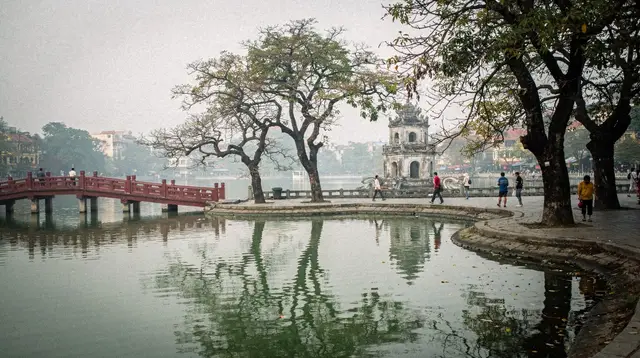
GetYourGuide does not provide a product photo for this activity — the image shows the meeting point, photographed by us.