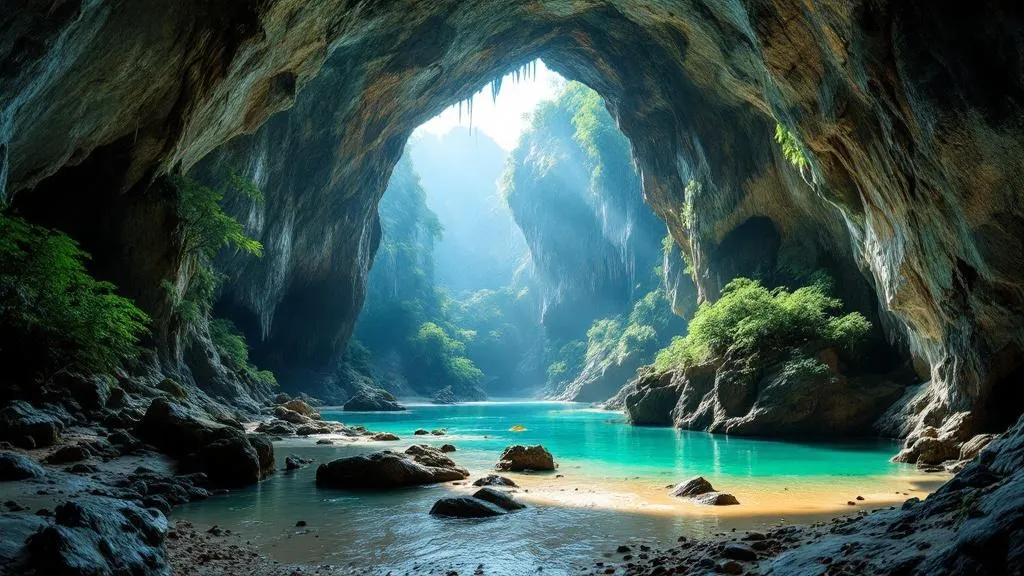
Phong Nha is a small riverside village in central Vietnam, and it is the doorway to one of the most remarkable limestone landscapes in Southeast Asia. Around it spreads Phong Nha-Ke Bang National Park, inscribed by UNESCO in 2003 for its karst formations and some of the longest, largest and most spectacular caves on the planet. If you are building a route through Central Vietnam, this is the stop where the country feels green, quiet and unhurried, a long way from the beach resorts.
Phong Nha at a glance: what you actually do here
An honest picture first. A visit to Phong Nha is built around three things: caves reached by boat or on foot, a relaxed village base, and the countryside of rice fields, rivers and limestone peaks around it. You do not need to be an expert caver. The best-known caves are set up for ordinary visitors, with ticketing, boats, walkways and lighting.
Typical activities include:
- Phong Nha Cave, entered by a long wooden boat on the Son River.
- Paradise Cave, reached by a climb of steps and then a raised walkway through an enormous chamber.
- Smaller adventure caves with zipline, swimming and mud, for those who want something muddier.
- Cycling or motorbike rides through villages, paddy fields and the valley roads.
- Slow evenings in the village, with homestay meals and river views.
Most people spend one or two days on the accessible caves, then move on. If you love hiking and quiet landscapes, a few more days make sense. The wider context for all of this sits in the Phong Nha cave tours guide and on the things to do in Phong Nha page.
Son Doong: clearing up the biggest confusion
Before you plan anything, understand this: Son Doong is not a tourist stop. It is the largest known cave passage in the world, and it is what first put this region on the international map, which is why many travellers arrive assuming they can simply buy a ticket for an afternoon.
You cannot. Visiting Son Doong is a multi-day expedition with a limited number of permits each season, a small group size, safety training, camping underground and a price that places it among the most expensive experiences in the country. Places are booked a long time in advance, and the cave is only open in the drier part of the year, because rivers inside it rise with the rains.
So think of it as a separate trip, not a line on a day-trip list:
| Day-trip caves | Son Doong expedition | |
|---|---|---|
| Format | Boat or short walk, return to the village | Several days, trekking and camping |
| Booking | Days ahead, often same week | Long in advance, limited permits |
| Fitness | Ordinary | Good, with a briefing and training |
| Cost | Modest | Very high |
| Season | Most of the year, weather permitting | Dry season only |
If this is your dream, our Son Doong cave guide explains what the expedition involves. If it is not in your budget, do not feel you are missing the park. The accessible caves are genuinely impressive, and the surrounding scenery is the quiet bonus.
The caves you can visit in a day
Phong Nha Cave
The cave that gave the area its name is usually entered by boat from the village landing. You travel along the Son River, then glide into a wide cavern with towering stalactites, still water and cool air. The boat journey is part of the charm. Engines are cut inside and the boatmen row or pole through the chambers, which makes the experience feel calm rather than commercial.
Expect to share a boat with other visitors. Go early or late in the day if you want fewer crowds, and bring a light layer because the cave is noticeably cooler than the air outside. Water levels determine whether boats run, so after heavy rain the cave can close, sometimes at short notice.
Paradise Cave
Paradise Cave is the one most people remember. A path climbs from the entrance area to the mouth of the cave, and then a long wooden walkway leads you into a vast, softly lit chamber full of enormous formations. It is a walk, not a boat ride, and it is comfortable for most fitness levels, although the entrance stairs and the humidity make it tiring in the heat.
It is a good contrast to Phong Nha Cave, so many travellers combine both in a single day. A guided option such as a combined Phong Nha and Paradise Cave day removes the logistics, while a day tour that adds the park’s outdoor attractions suits people who want a fuller itinerary.
Adventure caves and the Dark Cave area
A short distance away, the Dark Cave and neighbouring sites add a more playful side to the park: ziplining, kayaking, swimming and a mud bath. These are fun if you are travelling with friends or want a break from slow sightseeing, but they are an activity park rather than a quiet natural experience. A package such as a daily tour that pairs Phong Nha Cave with an adventure park can fit both worlds into one day.
Getting to Phong Nha
Phong Nha is not on the main coastal highway, so it takes a small effort to reach, but not a heroic one. We deliberately avoid quoting precise journey times here, because road conditions, traffic and weather vary and published times change.
By air. The nearest airport is Dong Hoi, a domestic airport with flights from the major cities. From there you continue by taxi, private car or bus to the village, a road transfer of roughly 50 km. For a wider view of domestic flights, see our guide to domestic flights in Vietnam, and for how the country’s airports fit together, read Vietnam airports explained. Remember that no Vietnamese airport has a rail or metro link, so you always need a road transfer.
By train. The Reunification Express stops at Dong Hoi, which makes it easy to slot Phong Nha into a north-south rail journey. From the station you take a road transfer to the village. Our Vietnam train travel guide explains classes, sleeper berths and booking.
By road. Buses, minibuses and private cars connect the village to Dong Hoi and to other cities along the coast. If you prefer a fixed arrangement, a private car from Dong Hoi to Phong Nha is the simplest option, especially after a night train or a late flight.
From Hue. Many travellers combine Phong Nha with Hue, the former imperial capital, which also sits at the heart of the DMZ story. The DMZ and the Vinh Moc tunnels belong on the Hue page, so we leave them there. See the DMZ tours from Hue guide if the war history interests you.
From Da Nang. Da Nang and its beaches are covered on their own page. Phong Nha makes a good inland counterpoint to a coastal stay.
Where to base yourself
The village of Phong Nha is the natural base. It is small and quiet, and it has grown up around travellers, so you will find homestays, small guesthouses, cafes and a handful of bars. Evenings are slow, which many visitors love. A homestay with a garden or a view of the paddy fields is the classic choice.
A few practical points:
- Book ahead in the peak months. The village is small and the better rooms fill up.
- Eat locally. Village restaurants serve Vietnamese central dishes and home-style meals; ask your host for recommendations.
- Bring cash. Many small businesses prefer cash in dong, and there are few ATMs.
- Tap water is not drinkable. Use bottled or filtered water, as everywhere in Vietnam.
For help choosing the kind of stay that suits you, see our guide to where to stay in Vietnam and the notes on homestays in Vietnam.
The countryside around the caves
The caves get the headlines, but the landscape is half the point. Rice paddies, buffalo, river valleys and limestone peaks make the area a pleasure to explore at a human pace.
- Cycling. Flat valley roads make cycling pleasant, particularly in the cooler hours. A guided option such as a half-day cycling tour with street food tasting combines gentle riding with a local meal.
- Motorbike rides. A full-day countryside ride is a good way to see small villages and viewpoints, but be careful about licensing. Many insurers refuse claims if you ride without the correct licence, so read renting a motorbike in Vietnam before you decide. If you are not confident, a guided option such as a full-day countryside motorbike adventure keeps an experienced rider in charge.
- Trekking. Walks into the forest and between villages give you a sense of the park beyond the caves. An overnight option with a homestay, such as the Tan Hoa trekking tour, shows how people live in the hills.
None of these require special skills, though you should check conditions locally before setting out, particularly after rain.
When to go, and when caves close
Central Vietnam has its own climate pattern. The weather is hot and mostly dry from roughly February to August, which is the most dependable window for caves and outdoor activities. From roughly September to December the rainy season brings heavy downpours, with typhoons and floods most likely in October and November.
That matters here for a specific reason: caves are formed by water, and the rivers that run through and beside them rise quickly. In the wet season, boat caves can close, roads can flood and activities can be cancelled with little warning. This does not mean the area is unvisitable in the late year, but it does mean you need a flexible schedule, a buffer day and a willingness to change plans.
For a broader seasonal picture, read Vietnam’s rainy season and typhoons and our overall best time to visit Vietnam guide. Tet, the lunar new year, falls between late January and mid-February on a different date each year, and many local businesses close for several days, so check the calendar if you travel then.
A simple two-day plan
If you have two days, this plan covers the highlights without rushing.
Day 1. Arrive in the morning and settle into the village. In the afternoon, take the boat into Phong Nha Cave, then wander the riverside. Dinner at a village restaurant.
Day 2. Start early for Paradise Cave while it is quieter. Return for lunch, then spend the afternoon cycling the paddy roads or relaxing in your homestay garden.
With a third day, add a countryside ride or a trek, or visit one of the adventure caves. If you are building a longer route, Central Vietnam in five days shows how Phong Nha fits with Hue and the coast.
Budget and money
Phong Nha is generally cheaper than the big coastal resorts. A rough day’s budget, including cave tickets, a boat, meals and a local ride, runs from about 700,000 to 1,500,000 VND, which is roughly 25 to 55 EUR or about 300 to 650 NOK at mid-2026 rates. Prices drift, so always treat figures as indicative for 2026. Guided tours, private transfers and any expedition cost more.
Currency is the Vietnamese dong. Cards work at larger hotels and tour offices, but cash matters in the village. Our money in Vietnam guide covers cards, ATMs and tipping.
Practical tips
- Entry requirements depend on your nationality and change over time. Check the official immigration portal or your government’s advice before you travel, and see our Vietnam visa guide.
- Wear shoes with grip. Cave floors and steps are wet, and flip-flops are a poor choice.
- Pack a light layer. Caves are cool even on hot days.
- Protect electronics. Humidity and spray are common in caves, so a waterproof pouch is useful.
- Respect closures. Local authorities close caves for safety. These decisions are not negotiable and protect visitors.
Phong Nha questions travellers ask
Can I visit Son Doong on a day trip?
No. Son Doong is a multi-day, permit-limited expedition run by a small number of licensed operators, with a strict group size and a high price. The day-trip caves are Phong Nha Cave, Paradise Cave and a few others in the same park.
How do I get to Phong Nha?
Most visitors fly to Dong Hoi airport or arrive at Dong Hoi station on the Reunification Express, then continue by road to the village. Private cars, taxis and buses cover the last stretch. There is no rail or metro link to any airport.
When is the best time to visit Phong Nha?
Roughly February to August is the most reliable window. The rainy season runs roughly September to December, with typhoons and floods most likely in October and November, and caves can close when rivers rise.
How many days do I need in Phong Nha?
Two days covers Phong Nha Cave by boat, Paradise Cave on foot and a day in the countryside. Add more if you want trekking or a longer cave tour. Son Doong needs its own multi-day booking.
Is Phong Nha part of the demilitarized zone?
The area has wartime history, but the former DMZ sites such as the Vinh Moc tunnels are usually visited from Hue and covered on the Hue page. Phong Nha is mainly about caves and karst scenery.
Do I need cash in Phong Nha?
Yes, carry some. Cave tickets, small cafes, homestays and village restaurants often prefer cash in dong, while larger hotels and organised tours take cards. Withdraw before you arrive if you can.


