Ho Chi Minh City Street Food Tours: Which Format Suits You
Which street food tour should you pick in Ho Chi Minh City?
Choose a guided walking tour if you want an easy first introduction to southern food in the centre, a motorbike tour if you are comfortable as a pillion passenger and want to cover more ground, and an evening outing towards Cholon if you want the busiest, most local atmosphere. Carry small notes in cash and stick to bottled water.
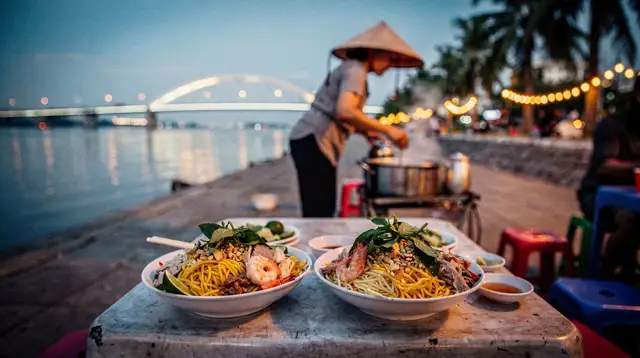
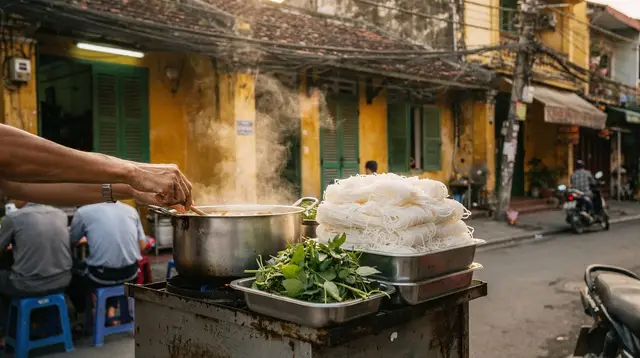
Saigon eats outdoors. From first light, when the pavement stalls steam with broken-rice plates, until the small hours, when the last noodle carts pack up, a large share of the city’s meals are bought from a plastic stool within a few metres of the traffic. That is the appeal, and it is also the reason many visitors feel lost: the best stalls have no sign in English, no menu you can read, and a queue of locals who clearly know the order of things.
A guided street food tour solves that problem. This page helps you choose between the main formats, tells you who each one suits, and explains the small practical points (cash, water, timing) that decide whether the evening goes well. It deliberately leaves out cooking classes and the big sights; for those, see the dedicated guides linked below.
What southern street food actually is
Ho Chi Minh City sits in the south, and the food here has its own personality. It is generally a little sweeter and more generous with herbs and fresh greens than the cooking further north, and it leans on rice, grilled meats, seafood and coconut. If you want the national picture first, our Vietnamese food guide sets out how the cuisine changes across the country. On a Saigon tour, expect the following to come up again and again:
- Com tam: broken rice, usually served with a grilled pork chop, a slice of egg meatloaf and pickles. A breakfast and lunch staple, and a dish the city is proud of.
- Hu tieu: a clear pork-based noodle soup with a southern accent, eaten with the broth in the bowl or served dry with the soup on the side.
- Banh xeo: a crisp, turmeric-yellow rice-flour pancake folded over prawns, pork and bean sprouts, wrapped in lettuce and herbs and dipped in sauce. It is eaten with your hands.
- Goi cuon: fresh summer rolls of rice paper, herbs, vermicelli and prawn or pork, served with a peanut-based dipping sauce.
- Ca phe sua da: strong filter coffee over ice with sweetened condensed milk, the city’s unofficial drink. If coffee interests you in its own right, see the Vietnamese coffee guide.
- Banh mi: the baguette sandwich, found on practically every corner and worth its own comparison. Our banh mi guide goes through the fillings.
A good tour will not try to cover all of these in one sitting. It will pick a handful and let you taste each one properly, with the guide explaining what is in it and how to eat it.
The three formats at a glance
| Format | Best for | Pace | Main trade-off |
|---|---|---|---|
| Walking tour in the centre | First-time visitors, families, older travellers, solo diners | Slow, a stop every few minutes | Covers a compact area only |
| Motorbike tour with a guide | Confident travellers who want range and atmosphere | Fast, with longer hops | Rides in heavy traffic, pillion only |
| Evening outing towards Cholon | Food-focused travellers who like a busy, local scene | Relaxed, long sit-down stops | Further from the centre, often needs transport |
None of these is better than the others. They suit different people and different evenings, and plenty of visitors do one walking tour early in the trip and one of the other formats later, once they have found their feet.
Walking tours in the centre
For most visitors this is the right starting point. The area around District 1 is dense with stalls, small restaurants and pavement cafés, and a guide on foot can move you between them in minutes. You will walk slowly, stop often, eat small portions and learn by watching. If you are not sure which neighbourhood to base yourself in, our guide to the city’s districts explains how District 1, District 3 and the others fit together.
What makes a walking tour work is the guide’s ability to read the street. They know which stall is excellent on a Tuesday evening, which one has run out by seven, and how to order without causing confusion. They also act as a quiet filter, steering you away from places that cater only to groups.
A few listings stand out for choosing between styles:
- A shared group outing such as the secret street food walking tour suits solo travellers and couples who like meeting other people at the table and keeping costs down.
- If you would rather have a guide to yourselves, a private walking tour with a dedicated guide lets you set the pace, flag dietary needs and linger where you like.
- Combined formats exist too, such as the afternoon city tour that ends in street food, a sensible choice if you want some orientation before dinner and only have a short time in the city.
Check each listing for the meeting point, the number of stops and what is included, because these differ from one operator to the next.
Who it suits
Walking tours are the most forgiving format. They work for families with children who can walk for a couple of hours, for older travellers who prefer not to ride, and for anyone who is nervous about eating from the street for the first time. They also work in the rainy season, because you can step under an awning in seconds when a late-afternoon downpour arrives.
What to watch for
Heat is the main enemy. The south is warm all year, and an early-evening walk can feel heavy even after sunset. Wear light clothes and drink water between stops. Pavements are uneven, and scooters sometimes park or ride on them, so watch your feet and look both ways even when you are walking on the pavement.
Motorbike food tours
The motorbike format is the most distinctive Saigon experience. You ride pillion behind a driver, often a guide’s colleague, and the group moves from one district to another in a loose convoy. You see the city at night from the middle of its traffic, and you reach places that would be a long taxi ride otherwise: neighbourhood markets, seafood stalls and small family restaurants on side streets.
It is not for everyone. You are sitting on the back of a motorbike in some of the busiest traffic in Southeast Asia. Reputable operators supply helmets and brief you on how to sit and hold on, but you should be honest with yourself about whether you will enjoy it or spend the evening gripping the seat. For a broader look at the riding options, see our Ho Chi Minh City motorbike tours guide, and for a gentler cousin of the same idea, the Vespa and cyclo tours move at a calmer pace.
Who it suits
- Confident travellers who are comfortable as passengers on two wheels.
- People with limited time who want to sample several areas in one night.
- Photographers and night-owls who want the city lit up, not seen from a window.
Who should skip it
Skip it if you are travelling with small children, if you have mobility or balance issues, or if you simply dislike motorbikes. Also remember that most insurance policies treat riding differently from being a passenger, and many exclude motorbike accidents entirely if the rider is not properly licensed. Read your policy before you book, and see our travel insurance guide for what to look for.
An evening towards Cholon
Cholon, the old Chinese quarter west of the centre, has a different feel from District 1. The streets are narrower and busier, the signs are in Chinese characters as well as Vietnamese, and the food reflects the Cantonese and Teochew communities who settled here: dim sum, roast meats, sweet soups and steamed rice-flour dishes alongside the southern staples.
An evening outing here is slower and more sit-down than a walking tour in the centre. You spend longer at each table, the portions are larger, and the atmosphere is a neighbourhood at supper rather than a procession through tourist streets. It is also the quieter format in terms of crowds of other visitors.
Because Cholon is some distance from the centre, most visitors reach it by ride-hailing app or as part of a guided outing that includes transport. Check the listing carefully: some tours cover only the centre and call themselves city food tours, while others genuinely include Cholon. If Cholon is the reason you are booking, confirm that it appears in the itinerary before you pay.
Who it suits
Travellers who have already done a first introduction and want something more local. It is also a good fit for people who prefer to sit and eat properly rather than stand at a counter, and for anyone curious about the Chinese influence on the city’s cooking.
Adding music or an evening on the water
Some tours wrap the food in a different kind of evening. The street food tour with live acoustic music is one example, adding a musical element to the meal, which suits couples and small groups who want a more relaxed night than a pure food crawl. Read the listing to see how much of the evening is food and how much is music.
If you want something more formal, a dinner cruise on the Saigon River offers a buffet rather than street cooking. It is a different experience from the stalls, so we cover it separately in our Saigon river cruises guide, and it should not be confused with a street food tour. For after-dark entertainment more broadly, see the shows and nightlife guide.
Cash: why it matters
Cash is still king on the street. Most stalls, small cafés and market vendors will not take cards, and many have never heard of a QR payment that works for foreign phones. Even if your tour is prepaid and the tastings are included, carry small notes for the things the tour does not cover: a second coffee, a dessert you spot on the way, a tip for the guide, or a bag of fruit from a cart.
A few practical points on money:
- Vietnamese banknotes come in large numbers. In 2026 the rate is roughly 26,000 dong to one US dollar and about 28,000 to one euro, and it drifts slowly, so check the current rate before you withdraw.
- Withdraw from machines inside bank branches or reputable malls rather than street-side ATMs, and keep a few small notes separate from larger ones so you are not pulling out a thick roll at a stall.
- The US dollar is not legal tender, so do not plan to pay in dollars.
Our guides to money in Vietnam and whether you need cash go into this in more detail.
Water, ice and eating safely
Tap water is not drinkable anywhere in Vietnam, and Saigon is no exception. Stay on bottled or filtered water for drinking and for brushing your teeth. Restaurants and tour operators serve sealed bottles, and locals will understand a request for “nuoc suoi” (bottled water).
Ice is a more nuanced question. In established cafés and restaurants in the city, ice is usually made from treated water and delivered in cylinder-shaped pieces, which is a good sign. Ice of unknown origin at a roadside stall is a risk some travellers prefer to avoid. A guide will tell you which is which.
A few habits help generally:
- Eat where there is a queue and the turnover is quick.
- Choose food that is cooked in front of you and served hot.
- Be sensible with raw herbs and salads if your stomach is sensitive. Wash your hands or use sanitiser before eating.
- Pace yourself. Small tastings across several stops add up quickly.
Our article on street food safety and the note on drinking tap water go through the reasoning in more depth.
How to pick the right tour
With so many listings, a short checklist helps.
- Decide the format first. Walking, motorbike or Cholon-focused. Do not let a headline price or a photograph choose for you.
- Look at the group size. Smaller groups are easier to hear, quicker to seat and more flexible. A private tour gives you the most control.
- Read what is included. Some tours include all tastings and drinks, others include a set number of dishes. Know what you are paying for and what you will pay for on the spot.
- Check the meeting point and timing. Late afternoon into evening is when the stalls are at their liveliest. Very early tours see different food (breakfast stalls) and are a different experience.
- Mention dietary needs when you book. Allergies, vegetarian eating and religious requirements need advance notice in a cuisine built on fish sauce and pork broth.
- Look at recent reviews. Pay attention to comments about the guide, pace and whether the food was shared fairly.
Timing and seasons
Street food runs year-round in Saigon, so there is no off-season for eating. The weather is what changes. The dry months, roughly December to April, are hot and comfortable for walking in the evening. From about May to November the rains come, usually as short, heavy downpours in the late afternoon. A food tour in the wet season is entirely workable; the rain tends to pass within an hour, and many stalls have awnings. Plan your outing a little later, and keep a light rain jacket or a poncho in your bag.
If you are visiting during Tet, the lunar new year (late January to mid-February, with a different date every year), expect many stalls and small restaurants to close for several days. Check ahead rather than assuming your tour will run.
Fitting a food tour into your stay
A food tour works best on your first or second evening. It teaches you how to order, what the dishes are called and which stalls are worth returning to, and you can then eat independently for the rest of the trip. If you have a few days, pair it with a daytime sightseeing outing; our Ho Chi Minh City city tours guide covers the main options, and the cooking classes guide is the place to go if you would rather learn to make these dishes than only eat them.
For the wider picture of the city, start at our Ho Chi Minh City destination page, and for what lies beyond it see day trips from Ho Chi Minh City.
If you will be heading down to the Mekong Delta, a food tour in the delta city of Can Tho offers a different flavour of the south: the Can Tho walking street food tour is designed by a local chef, and sits naturally alongside a visit to the Can Tho floating markets.
Questions travellers ask about street food tours in Ho Chi Minh City
How long does a street food tour in Ho Chi Minh City usually last?
Most guided food outings run a few hours, often in the late afternoon and evening when the street stalls are busiest. Durations differ by operator, so check the listing for the exact length and the number of stops before you book.
Do I need cash on a street food tour?
Yes, bring some. Many tours include the tastings in the price, but you will still want small notes for a second coffee, a snack that catches your eye, a tip for the guide or a market purchase. Street stalls and small cafés mostly work in cash.
Is street food in Ho Chi Minh City safe to eat?
Generally yes if you eat where the turnover is high and the food is cooked in front of you. A guide is the easiest way to find those places. Tap water is not drinkable anywhere in Vietnam, so drink bottled or filtered water and be careful with ice from unknown sources.
Can vegetarians join a street food tour?
Often yes, but tell the operator when you book, not on the evening itself. Fish sauce, shrimp paste and pork stock are everywhere in southern cooking, so a vegetarian menu needs planning, and a private guide gives the most flexibility.
Is a walking tour or a motorbike tour better?
A walking tour is calmer, easier to hear a guide on and suits most travellers, including families and older visitors. A motorbike tour covers more distance and reaches areas that are awkward on foot, but it suits people who are happy riding pillion in dense traffic.
What should I wear and bring?
Light, breathable clothes, comfortable closed shoes for uneven pavements, a small bag worn across the body, and a few small notes of cash. Keep your phone away from the roadside edge in the city centre, where bag and phone snatching from passing motorbikes is the main petty-crime risk.
Street Food Tours and Vietnamese Cuisine Tastings
Verified deep-linked GetYourGuide tours. Book through these links and we earn a small commission at no cost to you.
GetYourGuide does not provide a product photo for this activity — the image shows the meeting point, photographed by us.