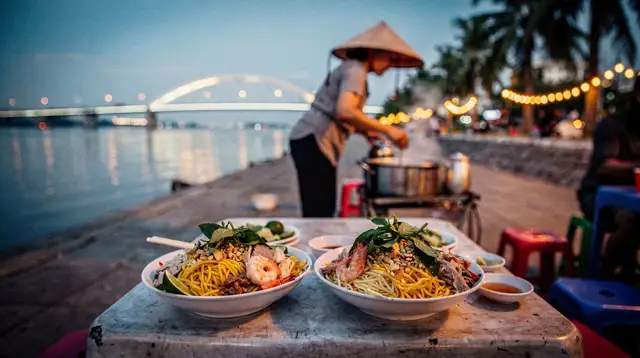
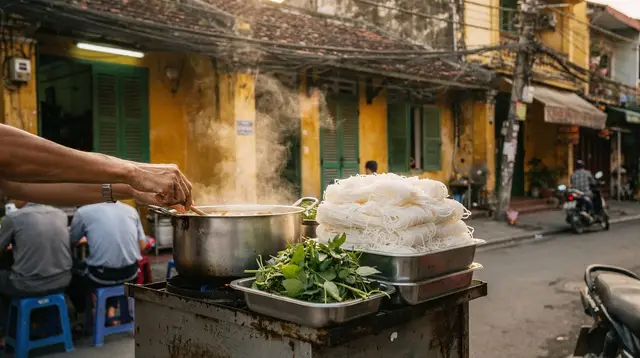
Vietnamese Food Guide: A Region-by-Region Map of What to Eat
What is Vietnamese food really like?
Vietnamese cooking changes from region to region: the north is subtle and broth-led, the centre is spicier and rooted in imperial cuisine, and the south is sweeter, more herbal and more generous. Pho, banh mi and fresh herbs appear everywhere, but the same dish rarely tastes the same in Hanoi and Saigon. Carry cash, drink bottled water and eat where locals queue.
Vietnam is about 1,650 km long, and its food changes almost as much as its climate does. A bowl of noodle soup in Hanoi, one in Hue and one in Ho Chi Minh City are three different meals, shaped by different weather, different histories and different ideas of balance. The best way to understand Vietnamese cooking is to treat it as a map rather than a menu: start in the cool north, follow the coast through the imperial centre, and finish in the warm, sweet, generous south.
This guide walks that map from north to south, then covers the dishes and drinks you will find everywhere, and ends with the practical habits that make eating in Vietnam easier. It deliberately leaves out prices and specific addresses, which change too quickly to be useful. For city-by-city food outings and hands-on classes, the neighbouring guides linked along the way go deeper.
Why the taste changes from north to south
Three things explain most of the differences you will notice at the table.
Climate. The north has real winters, and cold weather favours hot broths, black pepper, restrained seasoning and less sugar. The south is tropical all year, with fruit, coconut, fresh herbs and a sweeter hand with sugar and palm sugar. The centre is narrow, hot and exposed to storms, and its cooking is the boldest of the three, heavy on chilli, fermented shrimp paste and lemongrass.
History. Hue was the imperial capital of the Nguyen dynasty until 1945, and the court demanded many small, elaborate dishes, which is why central cooking feels so refined and so fiddly. The south was shaped by the Mekong Delta’s abundance, by Khmer and Chinese neighbours and by being a trading hub, so it mixes freely and likes plenty on the plate.
Habits. Northerners tend to eat their dishes closer to how they were first made. Southerners add herbs, sauces and sides more freely. A useful rule of thumb: the further south you go, the more you are handed to customise your own bowl.
One reassuring consequence is that you will not run out of things to try. Even a two-week trip across the country will give you three distinct cuisines.
Northern Vietnam: subtle, clear and precise
Northern food is often described as the most delicate in the country. Flavours are clean rather than loud: good stock, fresh herbs, a squeeze of lime, a dab of shrimp paste. Hanoi is the centre of this tradition, and it is the best place to taste the dishes in their original form. If you are heading there, the Hanoi destination guide covers the city itself, and the Old Quarter guide shows where the street food clusters.
Pho
Pho is the dish that introduced Vietnam to the world, and it was born in the north. The Hanoi version is built on a clear, deeply savoury beef broth, flat rice noodles, thin slices of beef and a scatter of spring onion. There is little else in the bowl. You will normally be offered chilli, lime and vinegar with garlic, but not the plate of bean sprouts and herbs that southern bowls come with. Many Hanoians eat it for breakfast, and the best-known stalls are often open only in the morning and the evening.
Bun cha
Bun cha is a Hanoi lunchtime ritual: grilled pork patties and slices of pork belly served in a bowl of sweet, sour and savoury broth, with a basket of fresh herbs and a mound of cold rice vermicelli on the side. You dip the noodles and herbs into the broth and eat them with the pork. The smell of charcoal smoke and caramelising pork drifts through the Old Quarter around midday, which is how many people find it. It is usually paired with nem, small fried spring rolls.
Cha ca
Cha ca is the capital’s most distinctive fish dish: pieces of fish marinated with turmeric, galangal and dill, then pan-fried at the table and eaten with rice noodles, peanuts, herbs and shrimp paste. The dill is the signature, and it is what makes it taste different from anything else in the country. It is a sit-down meal rather than a street snack, and it is worth trying once for its place in Hanoi’s food history.
Egg coffee
Ca phe trung, or egg coffee, was invented in Hanoi. A yolk is whipped with sugar and sometimes condensed milk until it becomes a thick, silky cream, then poured over strong coffee. It tastes closer to tiramisu than to anything you would call a breakfast drink. Our short egg coffee guide explains the story and how to order it hot or cold.
Other northern flavours to look for
Look out for banh cuon, thin steamed rice-flour rolls filled with minced pork and mushrooms; xoi, sticky rice sold from baskets on the pavement in the morning; and the grilled and boiled snacks that fill Hanoi’s night streets. For a structured way into all of this, a guide who knows the neighbourhood saves a lot of trial and error, and a private street food tour in Hanoi is the easiest place to start. If you prefer a single booking, you can look at the private walking food tour of Hanoi’s street food.
Central Vietnam: spicy, imperial and full of small plates
The centre is where Vietnamese cooking becomes bold. The land is narrow and the soil poor, the weather can be harsh, and the food reflects it: more chilli, more salt, more fermented flavour, and a surprising amount of care. Hue’s imperial kitchens left a legacy of dozens of small dishes made for one or two bites, and that habit survives in the street cooking of the whole region. The Hue guide and the Hoi An guide cover where to base yourself.
Bun bo Hue
Bun bo Hue is the spicy answer to pho, and the two are often compared in the same breath. The broth is built on beef bones and lemongrass, with chilli oil and fermented shrimp paste, and it is served with thick, round noodles, slices of beef and pork, and sometimes pork knuckle. It is richer, more aromatic and much more assertive than pho. If you want to understand the difference properly, read pho versus bun bo Hue.
Banh beo and the Hue small plates
Banh beo are tiny steamed rice cakes served in little saucers, topped with dried shrimp, spring onion oil and crispy pork skin, and eaten with a small spoon and a dash of fish sauce. They sit in a family of Hue snacks that includes banh nam, banh loc and banh bot loc, all made of rice or tapioca flour and steamed in leaves or dishes. You eat several rather than one, and the ritual of a table covered in small plates is very much the point. The Hue street food guide covers where to find them.
Cao lau
Cao lau belongs to Hoi An and, in its proper form, almost nowhere else. The noodles are thick and chewy, closer to udon than to pho, and are tossed with slices of pork, fresh greens, herbs and crisp crackers, with only a little sauce rather than a broth. Local tradition links the texture to the water of the town’s old wells, which is why it is said to taste different elsewhere. Whatever the truth, it is a dish that rewards being eaten where it began.
Mi quang
Mi quang comes from the Quang Nam region around Hoi An and Da Nang. It is a bowl of turmeric-yellow rice noodles with a small amount of rich broth, topped with pork, shrimp or chicken, peanuts, herbs and a crisp rice cracker that you crumble over the top. It is closer to a dressed noodle dish than a soup, and it is one of the best things you can eat in the centre. The Da Nang street food guide is a good starting point for the city.
Banh mi in Hoi An
Hoi An is famous for its banh mi, and the sandwich here is stuffed with plenty of pâté, pork, herbs and sauce. It is a good place to try one at a roadside cart and compare it with what you ate in the north. The banh mi guide explains how to order and what the fillings are. In Hoi An itself, the street food guide to the town lists what to eat after dark.
Southern Vietnam: sweet, herbal and generous
The south is where Vietnamese food feels most relaxed and most abundant. The Mekong Delta provides rice, fruit, fish and vegetables all year, and cooking leans on coconut, palm sugar, fresh herbs and a plate of extras for every dish. Ho Chi Minh City, still called Saigon by many, is the place to eat across the whole country, because people from everywhere have settled there. Start with the Ho Chi Minh City guide.
Com tam
Com tam, or broken rice, is a Saigon breakfast and lunch classic. The rice grains are fractured, giving them a soft, slightly nutty texture, and they are served under a grilled pork chop, with shredded pork skin, a slice of steamed egg cake and pickled vegetables, and a small bowl of sweet fish sauce. It is cheap, filling and eaten at all hours.
Hu tieu
Hu tieu is the southern noodle soup, and its roots lie in the Chinese-Vietnamese community of Cholon and the Mekong Delta. It is lighter and sweeter than pho, made with a pork-based broth and clear or rice noodles, and topped with pork, shrimp and quail eggs. You can order it with broth or dry, in which case the broth comes on the side.
Banh xeo
Banh xeo is a crisp, golden pancake made from rice flour and turmeric, filled with pork, shrimp and bean sprouts. The name comes from the sizzle it makes in the pan. Southern pancakes are large; you tear off a piece, wrap it in lettuce and herbs, and dip it in fish sauce. Coconut milk in the batter and a generous platter of leaves are what set the southern version apart from its central cousin, which is smaller and crunchier.
Goi cuon
Goi cuon are fresh rolls: rice paper wrapped around prawns, pork, vermicelli, lettuce and herbs, served with a peanut-hoisin dipping sauce. They are cold, light and refreshing, and they are the dish that most visitors find easiest to like. They are not fried, which makes them a welcome break after a day of richer food.
Ca phe sua da
Iced coffee with condensed milk is the drink of the south. Strong, dark robusta coffee is dripped through a small metal filter, over a layer of sweetened condensed milk, and poured over ice. It is sweet, bitter and cold at once, and it is the reason many travellers go home with a filter in their luggage. The Vietnamese coffee guide covers the other styles, from salt coffee to coconut coffee.
The Mekong Delta table
Beyond the city, the Mekong Delta is a place of orchards, fish and fruit. Elephant-ear fish, coconut-braised dishes and fresh river prawns are typical. The dawn floating market is at Can Tho, and it is also where a hands-on class is easiest to arrange; the hands-on cooking class in Can Tho pairs a market visit with cooking.
For a city-based start, a guided food tour of Ho Chi Minh City by scooter reaches several neighbourhoods in an evening, and the Ho Chi Minh City street food guide lists more options.
The same dish, a different face
One of the most useful things to know is that a dish keeps its name while changing its character. This table summarises how three of the best-known dishes differ between Hanoi and Saigon.
| Dish | In Hanoi | In Ho Chi Minh City |
|---|---|---|
| Pho | Clear, restrained broth, spring onion, few extras | Sweeter broth, plate of herbs and bean sprouts, hoisin and chilli sauces |
| Banh xeo | Smaller, thinner, crisper | Larger, richer with coconut milk, wrapped in lots of leaves |
| Coffee | Egg coffee, strong and small | Iced coffee with condensed milk, long and sweet |
This is not a ranking. Both versions are the real thing, and the easiest way to see it is to eat the same dish twice, once in the north and once in the south, and compare.
What you will find everywhere
Some foods have escaped regional borders entirely.
Banh mi. The Vietnamese baguette sandwich, a legacy of the French period, is made with a light, crisp roll, pâté, pickled carrot and radish, herbs, chilli and a choice of fillings. It is the national snack, sold from carts from before dawn until late. Every region has its own style, and it is worth trying it in at least three places.
Fresh herbs and rolls. A plate of greens comes with almost every meal: mint, coriander, perilla, Thai basil and lettuce. You tear them up and add them to your bowl. Do not leave them on the side; they are part of the dish.
Nuoc cham. The dipping sauce of fish sauce, lime, sugar, garlic and chilli is on the table or in a small dish nearly everywhere. Each cook has a different balance.
Bia hoi. Fresh draught beer, brewed daily and low in alcohol, served in glasses at street corners from plastic stools. It is among the cheapest and most social ways to spend an evening, and it is best enjoyed with a plate of grilled snacks. It is most visible in the north, but you will find similar corner beer places in many cities.
Fruit and sweet things. Che, the sweet dessert soups made with beans, jelly and coconut milk, are eaten at all times. Tropical fruit, such as mango, dragon fruit and rambutan, is sold at markets and from bicycles.
For a broader list that mixes regional and national dishes, the Vietnamese dishes to try article is a good companion to this one.
Practical habits for eating well
Good food in Vietnam is rarely about the restaurant. A few habits make a big difference.
Carry cash. Street stalls, markets and small cafés mostly take cash only, in dong, and a stack of small notes is more useful than a card. Hotels, tours, cruises and bigger restaurants do accept cards. The money in Vietnam guide explains denominations and how to avoid confusion with the many zeros.
Do not drink the tap water. It is not drinkable anywhere in Vietnam. Bottled or filtered water is the norm, and our tap water article covers ice, teeth brushing and fruit juices.
Follow the crowd. A busy stall with locals sitting on low plastic stools is almost always a better bet than an empty place with an English menu. High turnover means fresh food. Watch how the food is cooked, and choose dishes that are made in front of you and served hot.
Look for specialists. Many vendors sell a single dish and have done so for decades. If a stall sells only bun cha or only banh cuon, that is a good sign. Menus that list fifty dishes usually do none of them especially well.
Eat at the right time. Pho and banh mi are morning foods. Bun cha is a lunchtime dish. Grilled snacks and bia hoi are evening pleasures. Some stalls close when they run out, which can be before midday.
Use the table. The bottles and jars on the table, such as chilli sauce, chilli paste, pickled garlic and lime, are there for you to adjust the bowl. Taste first, then add.
Take care without being anxious. Stomach upsets happen to some travellers, usually from heat, tiredness and unfamiliar bacteria. Keep hydrated, use hand sanitiser and take your time. The street food safety article has a longer checklist.
Ask about dietary needs. Fish sauce, shrimp paste and pork stock are in a great many dishes. If you are vegetarian or allergic to shellfish, learn a few phrases or write your requirements in Vietnamese, and look for com chay restaurants, which are Buddhist vegetarian places.
Putting it together on a trip
If you have two weeks and travel the length of the country, a simple plan is to eat one regional signature per stop and then repeat the national favourites to compare them. For example, start with pho, bun cha and egg coffee in Hanoi, move to bun bo Hue and banh beo in Hue, try cao lau and mi quang in Hoi An, and finish with com tam, banh xeo and iced coffee in Saigon and the Delta.
If time is short, pick the region and stay with it. You will eat more deeply in one place than you would by skimming three.
A cooking class or a guided food tour helps to understand what you are eating, because the best explanations come from the person who makes the dish. In Hoi An you can combine a market visit with cooking, as in the cooking class and lantern-making workshop in Hoi An, and the Hoi An cooking classes guide compares the options. Choose a class early in a trip, and the rest of your meals will make more sense.
Vietnamese food FAQ: what travellers ask before they eat
What is the most famous Vietnamese dish?
Pho, the beef or chicken noodle soup, is the dish most visitors know, and banh mi is a close second. Both are eaten across the country, but each region has its own version, and locals often consider their regional specialities more representative than either.
Does Vietnamese food taste the same everywhere in the country?
No. Northern food is milder and more restrained, central food is spicier and more complex, and southern food is sweeter and richer in herbs and coconut. The same dish, such as pho or banh xeo, is noticeably different in Hanoi, Hue and Saigon.
Is street food in Vietnam safe to eat?
Generally yes, if you choose busy stalls with fast turnover, food cooked in front of you and piping-hot dishes. Be more careful with raw herbs and ice at very quiet stalls, and carry your own hand sanitiser. Stomach upsets are usually the result of heat, fatigue and unfamiliar bacteria rather than anything specific.
Do I need cash to eat in Vietnam?
Yes. Street food stalls, markets and small cafés mostly take cash only, in Vietnamese dong. Hotels, larger restaurants and tours accept cards, but a pocket of small notes is what lets you eat at the best places.
Can I drink the tap water in Vietnam?
No. Tap water is not drinkable anywhere in Vietnam, so use bottled or filtered water. Ice in restaurants and cafés is normally made industrially from filtered water and is widely consumed, though you can skip it at very basic stalls if you prefer.
Is Vietnamese food spicy?
Not by default. Chilli is usually served on the side so you control the heat. The centre, especially Hue, is the spiciest region, while the north and south are milder at the table.
Are there vegetarian options in Vietnam?
Yes, though you need to ask. Buddhist vegetarian restaurants, called com chay, are common in cities and around temples, and many dishes can be made without meat. Fish sauce is in almost everything, so say clearly what you do not eat.
Street Food Tours and Vietnamese Cuisine Tastings
Verified deep-linked GetYourGuide tours. Book through these links and we earn a small commission at no cost to you.
GetYourGuide does not provide a product photo for this activity — the image shows the meeting point, photographed by us.