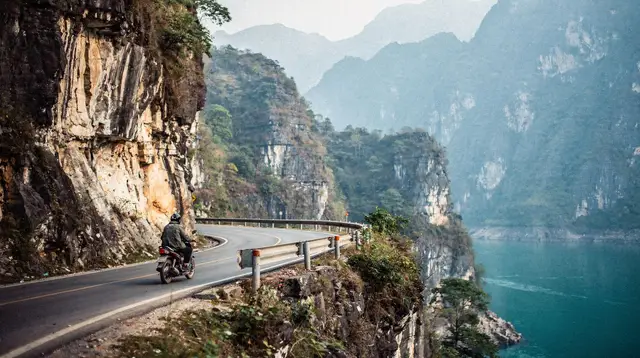
Da Lat Easy Rider Tours: Exploring the Highlands as a Passenger
What is an easy rider tour in Da Lat?
An easy rider is a local motorbike pilot who drives while you ride as a passenger, so you do not need a motorbike licence of your own. Da Lat sits at roughly 1,500 m on the Lang Biang plateau and stays cool all year, so bring a warm layer and rain protection. Tours run from a half day around the town to several days across the Central Highlands.
Plenty of travellers arrive in Da Lat curious about the hills, the farms and the waterfalls, then freeze at the idea of climbing onto a motorbike with a stranger. That hesitation is reasonable. Handing your back to a local driver is a real act of trust, and it deserves a straight explanation of what you are agreeing to, what it costs you in comfort, and how to tell a careful operator from a careless one.
This guide covers the highlands around Da Lat only. It explains what an easy rider is, why the model suits visitors who do not hold the right licence, how the cool climate changes what you pack, how to choose between a short outing and a multi-day crossing, and what to ask before you pay.
What an easy rider actually is
An easy rider is a local pilot who drives the motorbike while you sit behind as a passenger. You do not steer, navigate or park. The rider chooses the roads, stops where there is something worth seeing, and usually knows the farmers, café owners and temple keepers along the way.
The name comes from the way the trade grew up in the Central Highlands: freelance riders, often with years of local knowledge, who began taking visitors on the back of their bikes. Today some riders work independently and many work through agencies or booking platforms. The experience is similar in every case. You get a guide, a vehicle and a route in one package, and you see the countryside at a pace a bus or a minivan cannot match.
It helps to be clear about what an easy rider is not. It is not a motorbike rental, and it is not a group coach tour. Most days involve one rider per passenger or a small convoy, which means you can ask for a stop, a photo or a coffee without negotiating with twenty other people. You can read more about the wider Da Lat options in our Da Lat city tours guide.
Why riding pillion settles the licence question
The most practical argument for an easy rider is about paperwork. Riding a motorbike yourself in Vietnam requires the right licence, and many insurers refuse a claim after an accident if you were riding without it. A travel policy that looks generous on paper can turn out to cover nothing in that situation. Our guide to renting a motorbike in Vietnam goes through the licence problem in more detail, and travel insurance in Vietnam explains what to check in a policy.
When you ride as a passenger, you are not the driver, so the licence question does not apply to you. That does not remove the risk of a fall or a collision, and you should still read your policy for any exclusion around motorbikes or passenger use. But it takes away the most common reason a claim gets rejected.
The second argument is the road itself. Highland roads climb, drop and switch back, and in the wet they are slick with mud and diesel. Trucks and buses share them with farm vehicles and scooters. A rider who drives these roads every week reads them far better than a visitor on a rented bike on a first day.
Da Lat is cool: pack for the plateau, not the coast
Da Lat sits at roughly 1,500 m on the Lang Biang plateau, and that altitude is the whole point of the town. It is cool all year, which is why French colonists built a hill station here and why Vietnamese holidaymakers still come to escape the heat.
For an easy rider tour this has practical consequences. A motorbike moves through the air, and cool air moving at speed feels colder than the same air on a terrace. Early mornings and evenings in the highlands can be properly chilly. Do not assume tropical heat because you have just arrived from the coast or from Ho Chi Minh City.
What to bring:
- A warm layer, such as a fleece or light jacket, that fits under a rain shell.
- A rain jacket or poncho. Showers can arrive quickly, and many operators supply ponchos, but a good jacket is more comfortable.
- Closed shoes with grip. Waterfall paths and farm tracks are muddy after rain, and sandals are a bad idea on a pillion seat.
- Long trousers rather than shorts, for warmth and for skin protection if you slip.
- Sunglasses or clear glasses, since dust and insects are a fact of life on any open road.
- A small bag you can wear on your front or back, not a loose shoulder bag that catches the wind.
For a fuller kit list across the country, see our Vietnam packing list. If the weather turns, our rainy season guide explains how the seasons behave in the different regions.
What the tours cover
Most easy rider outings around Da Lat blend a few kinds of stop. The mix varies by operator and by the weather, so treat the following as a typical menu rather than a promise.
Waterfalls. The hills around town are laced with streams and falls, some with short paths down to the base. They are scenic, they are often slippery, and some are busier than others. For those who want something more adrenaline-driven than a viewing platform, Da Lat waterfalls and canyoning is a separate subject.
Farms and growers. The plateau supports vegetables, flowers, tea and coffee. Many tours stop at a farm where you can see how a crop is grown or processed. Coffee is a frequent theme, and our Vietnamese coffee guide explains the styles you will meet.
Villages and local life. Rural communities on the plateau include several ethnic minority groups. A good rider introduces these places respectfully, and does not treat a village like a stage set. Ask before photographing people.
Pagodas and viewpoints. Temples and lookouts give the day some structure and a rest from the road.
Lakes. The Paradise Lake route, for instance, centres its day around a lake and the countryside beyond it. You can see how a lake-centred outing is built in the full-day easy rider route around Paradise Lake.
Half day, full day or several days
The most useful decision is the length of the ride. It is also the one travellers most often get wrong, either by booking too little and feeling rushed, or by booking too much and spending hours in discomfort.
| Format | Best for | What to expect |
|---|---|---|
| Half day | First-time passengers, tight schedules, anyone testing the idea | A few stops close to town, such as a waterfall and a farm; low commitment |
| Full day | Most visitors | A broader loop with waterfalls, farms, villages and a pagoda, plus a long lunch |
| Multi-day | Experienced pillion riders who want to cross the highlands | Long hours on the road, overnight stays, luggage handled by the operator |
The half day: a gentle test
If you have never ridden pillion, start here. A half day gives you a feel for the seat, the traffic and your own comfort level before you commit to a bigger trip. It is also the sensible choice if the weather is uncertain or if you are travelling with someone who is nervous.
The full day: where most travellers land
A full day is long enough to leave the town behind and see how the plateau works: terraced vegetables, greenhouses, a waterfall, a village and a temple. Several of the popular routes are built on this model. The countryside adventure easy rider tour is one example, and the village, farm and waterfall combinations listed in our tour selection follow a similar logic.
Expect to spend most of the day on the bike, with regular breaks. If a route feels too long by early afternoon, a good rider will shorten it rather than push on.
Several days: crossing the Central Highlands
A multi-day ride is a different kind of trip. You are not just seeing sights, you are moving across a region, staying in simple lodgings, eating at roadside places and spending long stretches of road with your rider. The reward is a sense of the highlands that day visitors never get. The cost is physical: long hours on a pillion seat are tiring, and the weather will not always cooperate.
One popular long route links Da Lat with Nha Trang on the coast, descending from the cool plateau to the sea. It is offered in both directions. The Nha Trang to Da Lat motorbike route gives you a sense of how this transfer is built as a one-day journey. If you would rather skip the long ride and keep the plateau for a shorter outing, our guide to getting around Vietnam lists the other ways to move between the highlands and the coast.
If you are weighing the Central Highlands as a whole rather than Da Lat alone, our Central Highlands destination page places Buon Ma Thuot and Kon Tum in context.
How to judge a serious operator
The easy rider trade is largely unregulated in practice, and quality varies. The good operators are very good. A few are not. You can tell the difference with a handful of direct questions asked before you pay.
Insurance
Ask what insurance covers you as a passenger, who the insurer is, and what the policy actually pays for. A reply such as “do not worry” is not an answer. A serious operator can tell you plainly whether passengers are covered and under what conditions. Then compare that answer with your own travel policy, because the two may interact.
Helmets and gear
A helmet should fit, fasten and be in decent condition. A cracked shell or a loose chin strap is a reason to say no. Ask whether ponchos or rain gear are supplied, and whether there is a helmet for a child if one is travelling.
Rider experience and language
Ask how long your rider has been guiding and whether they speak enough English to explain what you are seeing. A rider who cannot explain a route is only a driver. Many operators will give you a profile or name in advance. If they will not, that tells you something.
Assistance if something goes wrong
Bikes break down, tyres puncture and weather closes roads. Ask what happens then: is there a backup vehicle, a replacement rider, a phone number you can call? An operator with a clear answer has usually handled the situation before.
What is included
Entrance fees, meals, drinks and any luggage transfer should be spelled out before you go. Hidden extras at waterfalls or farms are one of the most common sources of friction. Our guide to scams to avoid in Vietnam covers overcharging patterns more broadly.
Reviews and booking channel
Read recent reviews rather than only star ratings. Pay attention to comments about the rider’s driving, about whether the tour matched its description, and about how the operator handled a problem. Booking through a platform that holds your payment and offers a cancellation policy adds a layer of protection that a cash arrangement on the pavement does not.
Riding pillion: what it feels like and how to do it well
If you have never ridden on the back of a motorbike, a few habits make the day safer and easier.
- Sit close to the rider and keep your feet on the pegs. Do not dangle your legs.
- Lean with the bike, not against it. In bends, keep your body in line with the rider’s.
- Hold the grab rail or the rider’s waist, as agreed, and keep your hands away from the exhaust.
- Do not make sudden movements, turn round abruptly or lean out to take photos while moving.
- Tell your rider early if you need a stop, feel unwell or want them to slow down. A good rider wants to hear it.
- Wear your helmet properly fastened for the whole ride, including short hops.
You also give up some control. You cannot choose the speed, and you will share the road with trucks, buses and scooters. If that makes you uneasy, say so before you leave. A rider who understands your limit will drive more gently, and a rider who dismisses it is the wrong choice.
Easy rider or something else?
An easy rider tour is not the only way to see the plateau, and for some travellers it is not the best.
If you want a guided walk through pine forest and ridgelines, look at Da Lat trekking and hiking. If water sports are the point, canyoning is a different activity altogether, and the Da Lat canyoning outing is built for that. If you would prefer to stay in town and have a car or a driver handle the sights, the Da Lat city tours guide covers that option. For short hops inside town, ride-hailing apps are often enough; see Grab and taxis in Vietnam.
The north has its own motorbike traditions, and this page does not cover them. If you are planning a mountain route there, start with our Ha Giang loop tours guide, which is written for that landscape.
For everything that falls under this style of travel, our motorbike loops category collects the options, and things to do in Da Lat lists the other activities in and around town.
A sensible way to plan your day
- Choose the length first. Half day if you are unsure, full day if you want the plateau properly, multi-day only if you are ready for long hours on the road.
- Check your insurance wording for passenger and motorbike clauses before you pay.
- Pack the warm layer and the rain shell, even if the morning looks bright.
- Ask the operator the six questions above: insurance, helmet, rider, assistance, inclusions and cancellation.
- Carry small cash for coffee, snacks and fees you may not have prepaid.
- Tell your rider your comfort limit at the start, and revisit it at lunch.
If you want to see how a typical waterfall and culture day is put together before you decide, the waterfall and culture route with an easy rider gives a good picture of the style.
Frequently asked questions about Da Lat easy rider tours
Do I need a motorbike licence for an easy rider tour?
No. The easy rider drives and you ride pillion, so the question of your own licence does not arise. This matters because many insurers refuse a claim when a visitor rides a motorbike without the correct licence. Check your own policy wording before you travel.
Is Da Lat warm enough for a T-shirt?
Not reliably. Da Lat lies at roughly 1,500 m on the Lang Biang plateau and is cool all year, unlike the tropical coast. Pack a warm layer for mornings and evenings and a rain jacket or poncho, even if you arrive from Nha Trang or Ho Chi Minh City in the heat.
Should I book a half-day tour or several days?
A half day or full day suits a first visit and covers waterfalls, farms, villages and a pagoda around town. Several days make sense if you want to cross the Central Highlands towards Nha Trang or beyond, and you are comfortable spending hours on the back of a bike.
What should a serious operator provide?
A helmet that fits and is in good condition, insurance that covers passengers, a clear plan for what happens in a breakdown or accident, and a rider who speaks enough English to explain the route. If an operator is vague on any of these, look elsewhere.
Can I ride myself instead of riding pillion?
Some visitors rent a bike, but you need the correct licence for the machine, and insurers often refuse a claim without it. Highland roads are steep, wet and busy with trucks. Riding pillion with a local removes the licence question and the navigation.
Is an easy rider tour suitable for older travellers or children?
It depends on comfort on a motorbike seat and on how long the day is. Shorter half-day routes are gentler. Ask the operator about passenger age limits, child helmets and rest stops before booking, and consider a car with driver if a motorbike feels uncomfortable.
Do I need cash on the road?
Yes, a little. Farms, village cafés and roadside stalls in the Central Highlands are small businesses that mostly take cash in Vietnamese dong. Bring small notes for coffee, snacks and entrance fees, and settle what the tour includes before you set off.
Motorbike Loops and Countryside Excursions
Verified deep-linked GetYourGuide tours. Book through these links and we earn a small commission at no cost to you.
GetYourGuide does not provide a product photo for this activity — the image shows the meeting point, photographed by us.