Hoi An Street Food Tours: Cao Lau, Mi Quang and the Stalls Worth Following a Guide To
Is a street food tour worth it in Hoi An?
Yes, if you want to taste the local specialities, cao lau, mi quang, white rose dumplings and banh mi, without guessing which of the hundreds of stalls to trust. A guide on foot links the dishes to the stalls that cook them well, and a tour is easy to fit into one evening. Go in the dry months, carry some cash and drink bottled water.
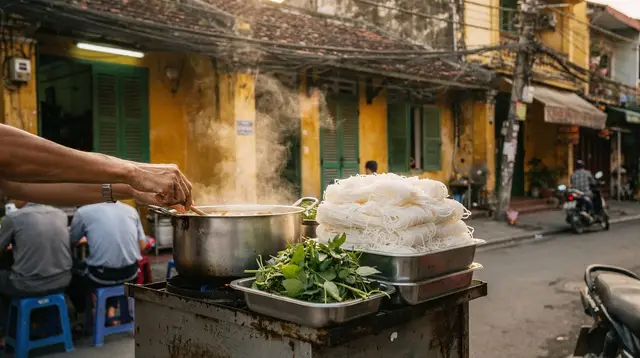
Hoi An is a small town with an outsized reputation for food. Within a few streets of the riverfront you can find a noodle dish that exists almost nowhere else, a rice-paper dumpling that is a local signature, and a baguette sandwich that travellers argue about for years afterwards. The difficulty is not scarcity but choice. There are hundreds of stalls, many of them near-identical to a stranger’s eye, and the best ones are often a plastic stool on a pavement with no sign at all.
That is the case for walking it with someone who knows. This guide explains what a street food tour in Hoi An actually involves, which dishes are worth building a route around, what the old town’s flood season does to an evening plan, and how to prepare so the experience is comfortable rather than rushed. If you are still choosing where to base yourself, the Hoi An destination page covers the town as a whole.
Two things worth correcting before you go
Two ideas circulate about eating in Hoi An that are not quite right, and getting them straight will improve your trip.
The UNESCO listing is for the buildings, not the cooking. Hoi An Ancient Town was inscribed on the World Heritage list in 1999 as a well-preserved South-East Asian trading port, with its timber shophouses, assembly halls, merchants’ houses and street plan. The cuisine is a fine reason to visit, and it grew out of the same trading history, but it is not a protected heritage item. When a tour operator or a menu implies an official food designation, treat it as marketing.
Bun bo Hue is not a Hoi An dish. It is the spicy, lemongrass-heavy beef noodle soup of Hue, the old imperial capital to the north. You can order it in Hoi An, and some stalls do it well, but a local will point you elsewhere. The comparison between the two is its own topic, covered in pho versus bun bo Hue, and if you are heading north the Hue street food guide is where that soup properly belongs.
The dishes that define the town
A good tour is built around a short list of things that are genuinely specific to this part of central Vietnam.
Cao lau
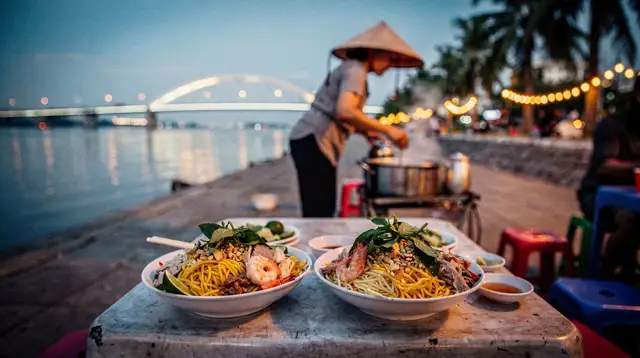
If Hoi An has a single signature dish, this is it. Cao lau is a bowl of thick, chewy, slightly smoky noodles, topped with slices of roast pork, fresh herbs and greens, and a little crisp fried noodle or pork crackling, with only a small amount of rich broth at the bottom. It is closer to a dressed noodle dish than a soup. The texture is the point: the noodles are firm and almost tough in a good way, quite unlike the soft rice noodles of the north.
Locals will tell you, with varying degrees of seriousness, that authentic cao lau depends on water from a particular old well and on ash from specific local wood. Whether or not that is literally true, it is a good illustration of why this dish is considered local rather than something you can order identically anywhere in the country.
Mi quang
Mi quang comes from the wider Quang Nam region around Hoi An and Da Nang, and it too is a noodle dish served with very little broth. Wide, flat rice noodles sit under a small ladle of turmeric-yellow stock, topped with pork or shrimp, peanuts, a rice cracker and fresh herbs. You are meant to break the cracker into the bowl and mix everything. It is more savoury and less sweet than many visitors expect, and it varies a great deal by cook, which is exactly why a guide’s choice of stall matters.
White rose and wonton-style dumplings
White rose dumplings are small, translucent parcels of shrimp or pork, pleated so that they resemble a flower, steamed and served with crisp fried shallots and a dipping sauce. They are made by a small number of families in the old town and are rarely found in the same form elsewhere. Fried wontons, served with a sweet-and-sour topping, sit alongside them on many tables.
Banh mi
The Vietnamese baguette sandwich exists everywhere, and Hoi An’s versions are among those that travellers rank highest. The bread is light and crisp, and the fillings are layered with pate, cold cuts, herbs, pickles, chilli and sauces. If you want a fuller background on what goes into one and why different regions differ, the banh mi guide goes into detail. A tour will usually pick one stall; an independent eater can easily spend an afternoon comparing.
Smaller things that fill a route
Alongside the headline dishes, expect a few smaller tastes:
- Banh xeo, the crisp turmeric pancake wrapped in herbs and rice paper
- Nem lui, lemongrass pork skewers eaten wrapped in rice paper
- Chè, the sweet dessert soups and puddings served in small bowls
- Cơm gà, shredded chicken rice, a dish that the nearby towns also claim
- Local coffee, including the sweet condensed-milk iced version
For a broader introduction to how these fit into the national picture, the Vietnamese food guide maps the regional differences between north, centre and south.
Why go on a tour rather than eat alone
You can eat very well in Hoi An with no tour at all, and many people do. A guided walk is useful for specific reasons, and it is worth being clear about them.
- Ordering. Many stalls have no English menu and no fixed prices on display. A guide orders for the group, explains what each dish is and shows you how to eat it, from the right amount of chilli to when to add herbs.
- Selection. A good guide has a sense of which stalls are consistent. A first-time visitor cannot easily tell the busy and excellent from the busy and merely central.
- Portion size. Tour portions are intentionally small, so you taste a number of different dishes rather than being full after one bowl.
- Context. You hear why a dish is local and how it relates to the town’s history as a port.
- Confidence. For those nervous about hygiene or unfamiliar food, going with someone who knows the places takes the guesswork out.
The honest downside is that a tour fixes your route and pace. If you like to wander and linger, you may prefer to do a tour on your first night and then eat independently for the rest of your stay, using what you learned.
How much can you realistically taste?
Tour formats differ, and the right expectation is a taster, not a feast. Most routes give you a series of small portions at several stops, which is usually enough for a light dinner or a substantial snack but not an unlimited meal. Expect to try a handful of dishes, typically a mix of a noodle dish, something steamed or fried, a sandwich or pancake, and a sweet or a drink to finish. Exact numbers of stops, dishes and walking time depend on the operator, so check the listing for the specific tour rather than relying on a general figure.
If you have a big appetite, eat lightly earlier in the day, or plan a second meal afterwards. If you have a small one, ask whether portions can be shared.
Choosing a tour
The listings below differ mostly in time of day, length and route. Details such as exact stops, group size and what is included are set by each operator, so read the current listing before you book.
For a classic walking introduction, the broad street food walk through the old town is the format most first-time visitors choose. It is designed to cover the signature dishes in one go.
If you are short on time, the shorter 2.5-hour street food tour keeps to a compact route and works well as an early-evening activity before you go on to the lantern-lit riverfront.
For travellers who want to get away from the busiest lanes, the evening walk through the hidden alleys focuses on the smaller stalls and back streets, where the crowds are thinner and the food is more neighbourhood than tourist.
Other tours combine eating with another activity. A sunset ride along the river and through the paddy fields, or a half-day cycling trip into the countryside, can be paired with a street food evening, though they are not food tours in themselves. If you want to understand how the dishes are made, a cooking class goes further than a tasting walk, and the Hoi An cooking classes guide compares the options.
Day or evening?
An evening tour has the atmosphere: the lanterns come on, the river is busy and the old town is at its liveliest. It is also the busiest time, and some of the pedestrian streets are closed to motorbikes in the evening, which makes walking pleasant. A daytime route is hotter, quieter, and better for seeing the market in operation and for photographs, but some stalls only trade in the evening, so the lists differ. Most visitors prefer the evening.
When the old town floods
Hoi An sits on a low river plain, and the Thu Bon river rises in the rainy season. In some years the water enters the old town streets, and shops and restaurants on the riverfront are the first to be affected. This usually happens between roughly September and December, with the risk at its highest in October and November, when typhoons and heavy rain across central Vietnam are most likely.
It does not happen every year, and flooding in the town is often temporary. But if you are visiting in that window, it changes how you should plan an evening walk:
- Check the weather and local advice before you book, and keep dates flexible if you can.
- Expect that tour routes may be changed or cancelled, and ask what the policy is when you book.
- Wear shoes that can get wet and carry a light rain layer rather than relying on an umbrella.
- If the water is up, many local families and stalls still carry on, and there is something memorable about boats moving along streets, but your usual route may not be passable.
For the wider pattern, the rainy season and typhoon guide and the article on typhoon season in central Vietnam explain how to read the forecasts. Outside that window, the central coast is generally drier from roughly February to August, which makes those months the easier time for evening food walks.
Practical preparation
Cash
Cards are accepted at hotels, larger restaurants and many tour companies, but street stalls, market vendors and small cafés mostly deal in cash. Even if your tour is prepaid, bring some notes for tips, extra drinks and anything you want to buy on the side. Prices are quoted in Vietnamese dong in large numbers, and the exchange rate shifts, so check it and note the year. The money in Vietnam guide explains the denominations and where to withdraw.
Water
Tap water is not safe to drink. Use bottled or filtered water, and note that your tour will normally provide or sell it. The article on tap water covers ice, brushing teeth and fruit.
Eating safely
Street food in Hoi An is generally fine when you eat where the turnover is high, the food is cooked in front of you and the plate is hot. Stomach upsets are more often caused by an abrupt change of diet and by heat than by any single stall. A short guide to what to watch for sits in the street food safety article.
What to wear and bring
- Light clothes and comfortable closed or sturdy sandals; old-town pavements are uneven
- A small bag for cash, a phone and tissues, as napkins are minimal
- Insect repellent in the evening, especially near the river
- A light layer in the rainy season
Dietary needs
Fish sauce, shrimp paste, pork fat and peanuts are everywhere. If you are vegetarian, vegan, allergic to shellfish or nuts, or avoid pork, say so when you book and again at the start of the walk. Many tours can adapt, but a route built around cao lau and pork dumplings is harder to adjust than you would think, so raise it early.
Fitting it into your stay
A food tour works best on your first or second evening, because what you learn helps you eat better for the rest of the trip. Hoi An is small, and a hotel in or near the old town means you can walk back afterwards. If you have yet to choose, the guide to where to stay in Hoi An compares the old town, the rice-field areas and the beach at An Bang.
Hoi An is also about 45 minutes from Da Nang by road, and the two cities have different eating cultures. Da Nang is bigger, more modern and leans toward seafood and its own noodle soups. It deserves its own evening, and the Da Nang street food guide covers it, so that this page can stay with Hoi An.
Final thoughts
A street food tour in Hoi An is one of the easier ways to learn a place. In an evening you can taste what the town is known for, understand why it is different from its neighbours and come away with a list of stalls to return to. Keep the expectations realistic, keep some cash and a bottle of water with you, and check the weather if you are travelling between September and December.
Hoi An street food tours: frequently asked questions
Is the food of Hoi An protected by UNESCO?
No. The Ancient Town was inscribed on the UNESCO World Heritage list in 1999 for its architecture and its layout as a trading port, not for its cuisine. The dishes are a living tradition, and some are tied to the town, but they carry no UNESCO status.
Is bun bo Hue a Hoi An dish?
No. Bun bo Hue is the spicy beef noodle soup of Hue, about 120 km north. You will find it in Hoi An, but the dishes that belong to the town are cao lau, mi quang (which also belongs to the wider Quang Nam area), white rose dumplings and the local style of banh mi.
When does Hoi An flood?
The old town floods in some years during the rainy season, which runs roughly from September to December. The risk is highest in October and November, when typhoons can also pass through. It does not happen every year, and the water usually recedes within a day or two, but it can reshape an evening walk.
Do I need cash on a food tour?
Yes, bring some. Many stalls, markets and small cafés only take cash, even where a tour has been paid for by card online. Small notes are the most useful, and you should check the current exchange rate and year before you convert a large amount.
Can I drink the tap water in Hoi An?
No. Tap water is not drinkable anywhere in Vietnam. Use bottled or filtered water, and be cautious with ice of unknown origin, although ice in established restaurants and cafés is normally made from filtered water.
Should I eat in Hoi An or in Da Nang?
Both, if you have the time, but treat them as separate food scenes. Hoi An is the home of cao lau and white rose dumplings, while Da Nang, about 45 minutes away, has its own noodle soups and seafood. Da Nang has a guide of its own on this site.
What if I am vegetarian or have allergies?
Tell the operator when you book and again to the guide on the day. Fish sauce, shrimp paste, pork fat and peanuts appear in many dishes, so a standard route may need to be changed. Written notes in Vietnamese, which your guide can help with, make ordering much easier.
Street Food Tours and Vietnamese Cuisine Tastings
Verified deep-linked GetYourGuide tours. Book through these links and we earn a small commission at no cost to you.
GetYourGuide does not provide a product photo for this activity — the image shows the meeting point, photographed by us.