Sapa Herbal Baths and Spas: A Warm Soak After the Mountains
Is a herbal bath in Sapa worth doing?
Yes, if you have been walking in the hills and the evening is cold. A traditional herbal bath, often linked to the Red Dao villages near Sapa, is a hot soak in a plant-infused tub, usually taken at the end of the day. Treat it as a restful pause rather than a medical treatment, and book it after your trek, not before.
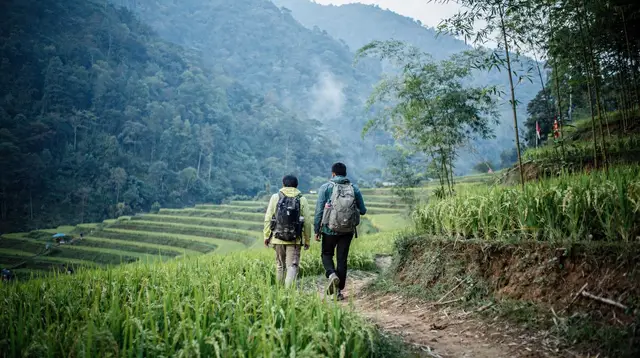
Sapa is a town you walk out of and walk back into. You leave in the morning with a daypack, spend hours on stony paths between terraces and bamboo, and come back at dusk with cold hands, tired legs and a strong wish for something hot. That is the moment this page is about. A herbal bath, or a simple spa session, is the pause that closes the day in the northern mountains, and in this part of Vietnam it makes more sense than almost anywhere else in the country.
This is not the page for trails, terraces or the summit. Those are covered in our Sapa trekking guide and the rice terraces guide. Here we stay with the end of the day: what a traditional bath is, what to expect, how to tell a real treatment house from a plain massage shop, and when to go.
Why a hot bath belongs to Sapa
The setting explains the custom. Sapa sits high in the northern mountains beneath Fansipan, at 3,147 m the highest peak in Vietnam. Altitude changes the feel of everything. The mornings can be fresh and misty even when Hanoi, a few hours away by road, is sticky. Clouds roll through the valleys in the afternoon, and the temperature drops quickly once the sun is behind the ridge.
Winter is the clearest case. From December to February the north is cool and grey, with Hanoi at 13 to 20 °C and the mountains much colder. Sapa can come close to freezing on some nights, and the damp gets into jackets and boots. Many guesthouses have little heating, so a hot bath is not a luxury add-on there. It is the most practical way to warm up properly.
Even in autumn, which is the best season in the north, evenings turn cool enough that a long soak after a day outside is welcome. If you are still deciding whether the town suits your trip at all, our honest take is in Is Sapa worth visiting?.
The Red Dao herbal bath, step by step
The herbal bath most visitors hear about is tied to the Red Dao, one of the ethnic minority communities of the northern mountains. You will find the tradition near Sapa, with villages such as Ta Phin often named on tour pages. For wider background on the peoples of the region, see ethnic minorities of northern Vietnam.
We will not pretend to know the recipe. Herb mixes differ from family to family, and hosts do not publish a fixed list. What is reasonable to expect, based on how these baths are usually offered:
- A private tub. A large wooden or similar tub, often in a separate room or small building, filled with hot water that has been infused with plants. You bathe on your own or with your own group, not in a shared pool.
- A visible, earthy water. The water is typically coloured and carries a plant smell. This is normal and is not a sign that something is wrong.
- A host who explains. In a genuine house, someone will tell you what the plants are called and what the bath is meant to do. If you ask what is in it, you should get an answer, even a simple one.
- A quiet finish. Afterwards you are expected to dry off, rest and drink something warm or at least water. The point is to stop, not to rush to the next stop.
We do not give a duration or a price here, because both vary by house and by what is bundled into the booking, and numbers we cannot check would be worse than none. Ask at the time of booking what is included, how long the session runs and whether it is private.
What it does and does not do
Honest framing matters. A herbal bath is a warm, relaxing soak. Hosts describe plant-based baths as good for tired muscles and general wellbeing, and after a day of walking that is easy to believe, because heat alone loosens stiff legs. But it is not a medical treatment, and you should not book one to treat an injury or a condition.
There are a few sensible precautions:
- If you have a heart condition, low blood pressure, are pregnant or are feeling unwell, check with a doctor before a very hot soak.
- Drink water before and after. Sitting in hot water is dehydrating in a way you do not feel until you stand up.
- Get out slowly, and leave the bath if you feel light-headed.
- Skip alcohol before the bath.
- If you have sensitive skin or known plant allergies, tell the host before you get in.
For broader health preparation for the country, see our health and vaccinations guide, and travel insurance is worth sorting before a trip that includes mountain walking.
Real treatment house or just a massage shop?
Sapa has plenty of places that advertise “spa” or “herbal”. Some are very good and some are only a bed in a back room. The words on the sign do not separate them. Look instead at how the place operates.
Signs of a genuine bath house or family-run treatment
- A clear explanation of the process, including what the bath is and what is in it.
- Private bathing space and a place to change, with towels and somewhere to leave your things.
- A set, visible menu of what is included, rather than a vague offer that grows once you are inside.
- Staff or a host who is comfortable with your questions and does not hurry you.
- A connection to a place or family: a village, a homestay or a tour that you can check.
Signs of a plain massage shop
- The main offer is massage only, with the bath mentioned as an add-on or not at all.
- Pressure to choose an extended package or extras once you are on the table.
- No clear information on what the product is, only a price list on the wall, or none.
- Street touts pulling you in off the pavement.
Neither is wrong in itself. A good massage after a long walk is a fine thing. The point is simply to know which you are buying. If a herbal bath is what you came for, book one that is described as such by a host, a homestay or a tour that you can look up, rather than walking into the first shopfront.
On etiquette, keep it simple: ask before photographing anyone, dress modestly when you arrive and leave, and follow the host’s instructions about the bath. Our etiquette and customs guide covers the wider habits.
Combining a bath with a village walk
The simplest way to do this is to let a tour arrange it. The soak then comes at the end of the walk, in the village, which is where it belongs.
One option is a half-day style outing that pairs a trek to a Red Dao village with the bath at the finish, for example this village trek ending in a Red Dao herbal bath at Ta Phin. If you would rather add a meal you cook yourself, there is also a village trek that adds a cooking class and a herbal bath.
If you are building a longer stay, a multi-day package that includes the bath avoids planning each piece. A four-day Sapa trip from Hanoi with Fansipan and a Red Dao herbal bath is one example. Check each page for exactly what is included and how the day is paced, since we do not list inclusions here.
You can also simply ask your own guesthouse or homestay. Many arrange a bath on request, and that is often the most direct route to a genuine, family-run experience.
Timing: the day, and the season
Time of day. Late afternoon or early evening is the natural slot. You have finished walking, the air is cooling, and you can follow the bath with dinner and an early night. A bath first thing in the morning is a gentler idea in cold weather, but the strongest case for it remains after effort, not before. If you have a long bus ride or a night train that evening, leave enough time to dry off, rest and drink something before you travel. Arriving at the station sweating and overheated, then stepping into a cold platform, is a mistake.
Season. The honest answer is that it depends on what you want from it.
| Season | Conditions in Sapa and the north | Herbal bath verdict |
|---|---|---|
| Spring (March–April) | Mild, with drizzle | Pleasant, mild evenings |
| Summer (May–September) | Hot, very humid and rainy, typhoon risk roughly July–September | Possible, but less inviting |
| Autumn (October–November) | The best season in the north, clear and cool | Excellent, with golden terraces by day |
| Winter (December–February) | Cool and grey, near freezing at times in the mountains | The most rewarding time for a hot soak |
If your only aim is the bath, winter is when it feels most earned, though you will need to pack properly and accept grey views. If you want walking weather and the scenery as well, autumn is the better compromise. For the wider picture, see the best time to visit Vietnam and the rainy season and typhoon guide.
Getting to Sapa for a short soak
Sapa is reached by road from Hanoi, and also by night train to Lao Cai followed by a road transfer up to the town. A sleeper journey is an easy way to turn the trip into a short break: our train travel guide explains how the services work, and the sleeping train between Hanoi and Sapa at Lao Cai is the usual route if you want to board in the evening and wake up at the foot of the mountains.
A two-night stay is the smallest that really gives you a walk and a soak without feeling rushed. Many visitors add Sapa to a wider northern loop, which is why it often sits next to Hanoi and the rest of northern Vietnam in itineraries.
What to pack for the bath
Travelling light is easy here. Pack:
- A warm layer and dry socks for the walk back, since you will be warm and slightly damp.
- A swimsuit or quick-dry clothing, if the host expects it. Ask in advance, as conventions vary.
- A small bag for wet clothes.
- A refillable bottle for after the soak. Remember that tap water in Vietnam is not drinkable, so use bottled or filtered water.
- Slip-on shoes that are easy to take off at the door.
More detail is in the packing list.
How this fits with the rest of Sapa
A bath is one part of a stay, not the reason to come. Most people arrive for the walking, the terraces and the mountain views, and the bath is the thing that makes the evenings good. If you are comparing Sapa with the other great northern route, our Sapa or Ha Giang comparison lays out the difference, and if two wheels appeal to you, see Sapa motorbike tours. For more things to do around the town, the Sapa activities page lists them, and the wider spa and wellness category covers the rest of the country.
For the town itself, our Sapa destination page has the overview.
Sapa herbal baths and spas: your questions answered
What is a herbal bath in Sapa?
It is a hot soak in a tub of water infused with mountain plants, traditionally associated with the Red Dao communities around Sapa. The exact mix of herbs varies from house to house, so ask the host what is in it rather than expecting a fixed recipe.
When is the best time of day for a herbal bath?
Late afternoon or early evening, once you are back from walking and the air has cooled. A hot bath is most welcome when you are tired and a little chilled, and it is easy to follow with dinner and an early night.
Which season is best for a herbal bath in Sapa?
Autumn and winter give the bath its full meaning, because evenings are cool and in winter can be cold, grey and damp. Spring and summer are also possible, but the long, humid, rainy summer days make a very hot soak less appealing.
How can I tell a real treatment house from a massage parlour?
A genuine herbal bath house is usually a family home or a dedicated bathhouse with private tubs, a host who can explain the plants and the process, and clear information on what is included. A shop that only sells massage and pushes you towards extras is a different thing.
Is a herbal bath safe for everyone?
Not necessarily. Hot water raises your heart rate, so people with heart or blood-pressure problems, pregnant travellers and anyone unwell should speak to a doctor first. Drink water, get out slowly, and leave the bath if you feel dizzy.
Can I combine a herbal bath with a village walk?
Yes. Several Sapa tours pair a village trek with a Red Dao herbal bath at the end, which is a natural fit because the soak comes after the walking. Check the tour page for what is included and how long the day runs.
Trekking and Hiking in the Northern Mountains and Beyond
Verified deep-linked GetYourGuide tours. Book through these links and we earn a small commission at no cost to you.
GetYourGuide does not provide a product photo for this activity — the image shows the meeting point, photographed by us.