Vietnam's Rice Terraces: Where to Go and When to Visit
Where and when should you see rice terraces in Vietnam?
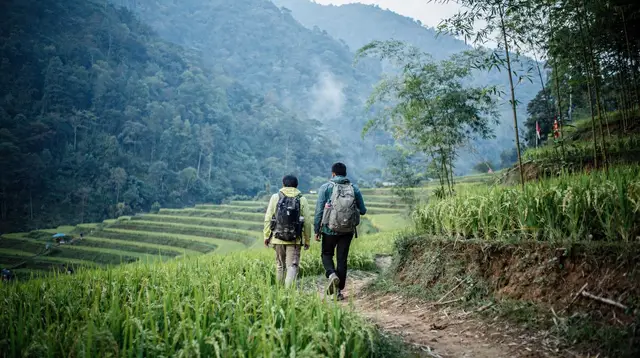
The terraces are in the northern mountains: Mu Cang Chai, Sapa, Mai Chau and Pu Luong. They turn green from about June and golden around September to October, which is the best window. Avoid assuming the whole country follows this pattern: the Mekong Delta is flat farmland, not terraces.
Terraced rice fields are one of the images people most associate with Vietnam, and they are also one of the easiest to get wrong. They only exist in the mountains of the north, they look completely different depending on the month, and a trip planned for the wrong weeks can mean bare brown slopes under low cloud. This guide compares the main sectors and helps you choose the right place and the right period. It does not map out trekking routes: for those, go to the Sapa trekking tours guide and the valley-by-valley trek pages.
Where Vietnam’s rice terraces actually are
Rice terraces are a hill-country technique. Farmers cut steps into a slope so that water can be held on each level, and that only makes sense where the land is steep and the rain is reliable. In Vietnam that means the northern mountains, the region covered in our Northern Vietnam overview.
Four sectors matter most for visitors:
- Mu Cang Chai, the most dramatic terraces, reached by a long road from Hanoi.
- Sapa, the most developed base, with villages in the valleys below Fansipan.
- Mai Chau, a gentler valley with a flatter, more pastoral feel.
- Pu Luong, a quiet nature reserve of terraces, bamboo water wheels and stilt-house homestays.
Further north, the Ha Giang loop crosses a very different, rocky landscape and has its own terraces here and there, but it is a separate trip. We treat it as a neighbour only: see the Ha Giang destination page and the Ha Giang loop tours guide if it interests you.
One confusion worth clearing up early: the Mekong Delta is not a terrace landscape. It is a vast, flat river plain, and its paddies, canals and orchards are lovely in their own right, but they have nothing in common with mountain terraces. If you are weighing the south against the north for scenery, read the Mekong Delta page for what it really offers.
When to go: the seasons of a terrace
The calendar is the heart of terrace travel. A rough picture for the northern mountains follows the rice cycle:
| Period | What the terraces look like | Weather to expect |
|---|---|---|
| Spring (March to April) | Mild, drizzly, fields being prepared | Cloud and drizzle are common |
| Early summer (about June) | Fresh green growth begins | Hot, humid, rain building |
| Mid to late summer (July to August) | Deep green, lush | Very humid, heavy rain, typhoon risk |
| Early autumn (September to October) | Golden, ripening and harvest | Often the best weather of the year |
| Late autumn (November) | Harvested, fading to stubble | Clearer, cooler |
| Winter (December to February) | Bare, brown or misty | Cool and grey, much colder in the mountains |
These are orders of magnitude rather than promises. The north has four distinct seasons, and the timing of planting and harvest shifts with the altitude, the variety of rice and the year. Always give yourself a margin and look at recent photos from guesthouses before committing to a date.
The simplest rule: green from about June, golden around September to October. If you want one season for the classic photograph, aim for the golden window. If you prefer a lush landscape with fewer visitors and can live with heavy rain, summer is a legitimate choice.
For the wider picture of how this fits into a full Vietnam trip, see the best time to visit Vietnam guide. Note that the north’s best season is autumn, but the centre and south follow different patterns, so a single country-wide “best month” does not exist.
Mu Cang Chai: the big sweeping curves
Mu Cang Chai is the sector people have in mind when they picture a hillside combed into curving golden steps. The terraces cling to steep slopes along the roads and valleys, and many of the best views are visible from the road itself, with viewpoints and pull-offs where cars and minibuses stop.
Why go
- The scale and shape of the terraces are the most striking in Vietnam.
- It is less crowded and less commercial than Sapa.
- You can see a great deal without a demanding walk.
What to know
- It is a long road journey from Hanoi, over winding mountain roads. Most visitors take a two-day trip or arrange a driver.
- Accommodation is simpler and more limited than in Sapa, so book ahead in the golden season.
- The roads are exposed to landslides after heavy rain, which matters in summer.
If you want to see it with minimal planning, a guided trip such as the two-day Mu Cang Chai terraces tour from Hanoi handles the transport and the overnight stop. Read more on the Mu Cang Chai destination page.
Sapa: the easiest base for walking
Sapa is the best known of the terrace areas and the one most visitors begin with. The town sits below Fansipan, the country’s highest peak at 3,147 m, and the terraced valleys drop away below it, with villages of the Hmong, Red Dao and other communities strung along the slopes.
Why go
- The widest choice of places to stay, restaurants and guides.
- Walking is the point: you move between villages on foot through the fields.
- It combines terraces with mountain scenery, local markets and the cable car or hike to Fansipan.
What to know
- It is the most visited sector, so the main paths can be busy in the golden weeks.
- Fog and cloud are frequent, and winter can be properly cold, occasionally near freezing.
- It can be reached by road, and also by night train to Lao Cai followed by a transfer.
Sapa is the right answer if you want terraces as part of a trekking trip rather than a drive-by photograph. Short options include an overnight walk through the valleys such as the two-day Ta Van and Lao Chai terrace trek, while longer trips link several villages. For routes and difficulty by valley, use the Sapa destination page and the Sapa trekking tours guide. If you are still deciding whether to go, our blog post on whether Sapa is worth visiting lays out the trade-offs honestly.
Mai Chau: gentle valley, easy first taste
Mai Chau is a wide valley with a patchwork of paddies, stilt houses and villages of the Thai community. The terraces here are less steep and less theatrical than at Mu Cang Chai, but the landscape is calm and approachable, and the distance from Hanoi is the shortest of the four.
Why go
- It is easy to combine with a few days around Hanoi.
- Cycling and short village walks suit families and anyone who is not keen on steep trails.
- It is a good first taste of the mountain countryside.
What to know
- The terraces are modest compared with the far north. Come for the valley and homestay, not for a record-breaking view.
- It is popular with weekend visitors, so a midweek stay is quieter.
See the Mai Chau destination page for practical details on the area.
Pu Luong: terraces, bamboo wheels and quiet
Pu Luong is a nature reserve close to Mai Chau, though it feels further away. The terraces follow rivers and valleys, and bamboo water wheels still lift water to fields in places. Accommodation is mostly in homestays and small eco-lodges, and the pace is slow.
Why go
- It is among the quietest of the terrace areas.
- Walking is gentle to moderate and the scenery combines fields, forest and streams.
- It suits travellers who want quiet more than a famous view.
What to know
- Facilities are basic, and some tracks become slippery after rain.
- Getting there takes longer than reaching Mai Chau, and public transport is limited, so a driver or organised tour is practical.
The Pu Luong destination page has more on the reserve.
Comparing the four sectors
| Sector | Best for | Pace | Crowds | Effort to reach from Hanoi |
|---|---|---|---|---|
| Mu Cang Chai | Dramatic views, photography | Road-based, short walks | Moderate, rising in October | Long road journey |
| Sapa | Trekking, village-to-village walks | Active | Highest | Long road journey or night train |
| Mai Chau | Easy countryside, families | Relaxed | Moderate at weekends | Shortest |
| Pu Luong | Quiet, nature, homestays | Slow | Low | Moderate, a driver helps |
If you can only choose one, choose by purpose. Photography and sheer scale point to Mu Cang Chai. Walking and variety point to Sapa. A relaxed escape from the city points to Mai Chau or Pu Luong. Many travellers who have a week in the north combine two sectors; our northern mountains loop itinerary shows how that can fit with a longer trip.
Weather risks: typhoons, rain and grey winters
The north is beautiful, but its weather is the main way a terrace trip goes wrong.
- Typhoon risk, roughly July to September. Storms are more common in this stretch, and they can bring heavy rain, flooding and cancelled transport. This overlaps with the weeks just before the golden season, so a late-summer trip needs flexibility. Our guide to Vietnam’s rainy season and typhoons explains how to read the risk.
- Landslides and road closures. Mountain roads can be damaged by sustained rain. Allow a spare day in your schedule, and do not plan a tight flight the evening you return to Hanoi.
- Grey, cold winters. From December to February the north is cool and often overcast. The terraces are bare, the light is flat and views can disappear into mist. Sapa can be much colder than Hanoi, and wet, muddy trails are common.
- Cloud in any season. Mountains make their own weather. Build two nights into a sector rather than one if the view is the reason for the trip.
None of this is a reason to avoid the north; it is a reason to schedule with margin. Autumn, with its clearer skies and golden fields, is popular for good reason, and our month pages for September in Vietnam and October in Vietnam go into the conditions in more detail.
Choosing your dates
A practical way to decide:
- Want gold and the classic photo? Aim for September to October, and book ahead, because rooms in the main sectors fill up.
- Want green and fewer people? Go from about June, accept humidity and rain, and keep an eye on typhoon forecasts.
- Only free in winter? Go for the walking, the villages and the markets, bring warm layers and set expectations about grey weather.
- Combining with the rest of the country? Remember that late February to April tends to suit most regions at once, but is not the peak of terrace colour.
Practical tips
- Pack for mud and chill. Shoes with grip matter more than gear. Our Vietnam packing list covers rain layers and the rest.
- Start early. Light is better and fog often lifts later in the morning.
- Respect the fields. The terraces are somebody’s living, not a stage. Keep to paths and ask before photographing people.
- Cash helps. Villages and homestays often do not take cards, so carry small notes.
- Consider a guide. Local guides explain the crop cycle and keep you on the right paths, which matters on slippery slopes.
Combining terraces with other stops
Because the terraces are in the north, they fit naturally with Hanoi and the region’s other landscapes. A common pairing is a few days in Hanoi first, and the Hanoi destination page is a good starting point. For a longer circuit, the three-day northern villages tour from Hanoi shows how several rural stops can be strung together. If you want a deeper dive into on-foot options, browse the trekking and hiking activities and our photography spots blog.
Frequently asked questions about Vietnam’s rice terraces
When are the rice terraces golden in Vietnam?
Around September and October in the north. The exact week shifts with the year, the valley and the altitude, so treat it as a window and check recent reports before fixing dates. Crops are green from about June.
Which is better for rice terraces, Sapa or Mu Cang Chai?
Sapa is easier to reach, has more places to stay and suits walking between villages. Mu Cang Chai is more about sweeping views from the road and is quieter. Many travellers choose Sapa for trekking and Mu Cang Chai for photography.
Are there rice terraces in the Mekong Delta?
No. The Mekong Delta is a flat river plain with paddies, canals and orchards. Terraces need mountain slopes, which means the northern highlands.
Is it worth going to the terraces in winter?
Only if you accept grey, cool, often misty weather. The fields are bare after harvest, so you come for the mountains, the villages and the walking rather than for colour.
Is there a typhoon risk when the terraces are at their best?
The typhoon risk in the north runs roughly from July to September, which overlaps the lead-up to the golden season. Heavy rain can also cause landslides on mountain roads, so build slack into your plans.
Can I see the terraces without trekking?
Yes. In Mu Cang Chai many of the best views are from the road, and in Sapa a car or short village walk is enough. Trekking adds quiet and village life but is not required.
How many days do I need for the terraces?
Two days is the practical minimum for a single sector from Hanoi, such as Mu Cang Chai. Three or four days lets you add a second area or slow the pace in one valley.
Trekking and Hiking in the Northern Mountains and Beyond
Verified deep-linked GetYourGuide tours. Book through these links and we earn a small commission at no cost to you.
GetYourGuide does not provide a product photo for this activity — the image shows the meeting point, photographed by us.