Sapa Motorbike Tours: Riding the Mountains Below Fansipan with a Local Driver
What is a Sapa motorbike tour?
It is a ride through the mountains around Sapa, usually pillion behind a local driver, linking villages, valleys, rice terraces and viewpoints below Fansipan (3,147 m). Weather decides the experience: winter is cold and grey, terraces are green from about June and golden around September and October, and July to September brings rain and typhoon risk.
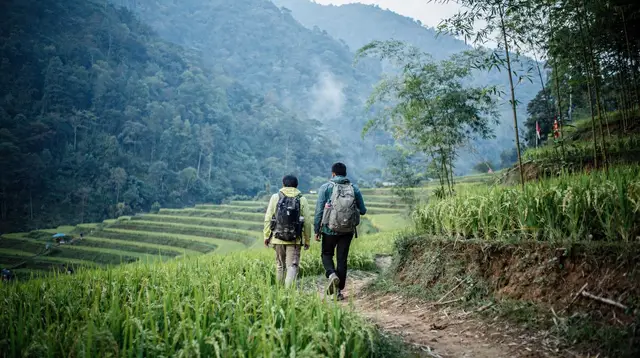
Sapa sits in the northern mountains below Fansipan, at 3,147 m the highest peak in the country, and almost everything about travelling here is shaped by relief. Roads climb and drop in long bends, valleys fill with cloud by mid-morning, and the temperature on a ridge can be a world away from the one in Hanoi. A motorbike ride with a local driver is one of the most direct ways to feel that landscape: you cover more ground than on foot, you stop wherever the view or the village asks you to, and you see how the terraces step down the slopes rather than just looking at them from a car window.
This guide is about that experience specifically. It explains what a Sapa motorbike tour actually involves, what the mountains change compared with the rest of Vietnam, how to choose between a short outing and a longer formula, and what to know about licences and insurance if you are tempted to drive yourself. Walking routes, multi-day treks and transfers from Hanoi have their own pages, linked below, so they are kept brief here.
Sapa on two wheels: what the ride is really like
A typical Sapa motorbike tour is a pillion ride behind a local driver. You sit behind an experienced rider who knows the surfaces, the blind corners and where the cloud usually sits, and you spend the day moving between viewpoints, villages and valleys in the hills around the town. The driver handles the bike; your job is to hold on, keep your weight neutral through the bends and tell them when you want to stop for a photograph.
Compared with riding in the lowlands, a few things change:
- Gradient. Roads climb steadily and descend in long switchbacks. Brakes and tyres work harder, and a good driver slows well before a bend rather than in it.
- Surface. Main roads are paved and usually decent, but village tracks can be rough, patched or muddy after rain. Landslide scars are common in the wet season.
- Visibility. Mist can come in quickly. A road that was clear at breakfast may be reduced to a few bends of visibility by late morning, and the driver will slow down accordingly.
- Temperature. It is cooler at height, and the wind on a moving bike makes it feel colder still. This is the biggest surprise for visitors who arrive from the humid lowlands.
- Pace. The point is not distance. A ride that looks short on the map takes real time, because mountain roads are slow and the best stops are the unplanned ones.
The settlements you pass belong to the ethnic minority communities of the northern mountains, whose farming rhythm drives the landscape: terraces planted and flooded, buffalo in the paddies, families drying crops by the roadside. Treat it as a working landscape rather than a stage. Ask before photographing people, and do not hand out sweets or money to children, which encourages begging.
For a wider sense of whether the area suits you, the honest assessment in is Sapa worth visiting is a useful companion, and the destination overview at Sapa places the town in the wider region.
What the mountains change: climate, mist and cold
This is the section to read before you book, because Sapa’s climate is not the climate of the rest of the country. Vietnam has three regional patterns, and the northern mountains are the coldest of them.
Winter (December to February) is cold and grey. Hanoi is cool at that time of year, but Sapa is considerably colder, with persistent low cloud, drizzle and temperatures that can approach freezing on some nights. Views of the valleys and of Fansipan itself are often hidden. If you ride in winter, treat it as a cold-weather activity: layers, a windproof outer shell, gloves, a warm hat under the helmet and something dry to change into.
Spring (March and April) is mild, with drizzle and shifting cloud. Flowers and fresh growth follow, but you should still expect mist and occasional rain.
Summer (May to September) is warmer, very humid and rainy. The terraces turn green from about June, and the slopes look at their lushest, which is the main attraction. The cost is rain, wet roads and a typhoon risk from roughly July to September that can disrupt or cancel rides. Sudden downpours and landslides on mountain roads are the practical hazards.
Autumn (October and November) is generally the best season in the north. Rice ripens and the terraces are golden around September and October, skies are clearer more often, and temperatures are comfortable for riding, though evenings are cool. This is also when demand is highest, so book earlier.
A few practical consequences:
- Do not promise yourself a Fansipan view. The summit is frequently in cloud. If a clear sky matters to you, build in a spare day and be ready to ride when the weather opens up.
- Check the forecast the evening before, not the week before. Mountain weather changes fast.
- Be realistic about rain. A light shower is a nuisance; heavy rain on steep roads is a reason to postpone. A good operator will say so rather than send you out.
For the wider picture across the year, see best time to visit Vietnam and Vietnam rainy season and typhoons. If the terraces are what you came for, Vietnam’s rice terraces compares the main regions, including Mu Cang Chai, which has its own character and its own timing.
Not the Ha Giang loop: clearing up a common confusion
Many travellers search for a northern motorbike adventure and find Sapa and Ha Giang mixed together. They are different regions with different formats, and it helps to separate them early.
The Ha Giang loop is a multi-day circuit across the Dong Van Karst Plateau, a UNESCO Global Geopark, with its famous Ma Pi Leng Pass, remote border country and the easy riders who take visitors through it. It is a long, demanding trip in its own right. You will find it covered in Ha Giang loop tours, and its safety record is discussed candidly in is the Ha Giang loop safe. The region itself is described at Ha Giang.
Sapa riding is a different proposition. It is based in and around Sapa, in the mountains below Fansipan, and the usual formats are outings that return to town in the evening. There is no Ma Pi Leng Pass here, and a Sapa ride is not a lighter version of the Ha Giang loop; the scenery, the roads and the culture of the villages are different.
If you are deciding between the two, Sapa or Ha Giang lays out the trade-offs. Briefly: Sapa is easier to reach and easier to fit into a short stay, while Ha Giang rewards travellers who have the time and appetite for a long, rugged circuit. A small number of operators do sell combined northern motorbike programmes that include both regions, but those are long multi-day products and a separate commitment.
Short outing or longer formula: how to choose
Operators sell Sapa motorbike tours in two broad shapes. The sensible choice depends on your comfort on a bike, your weather margin and how much of the area you want to see, not on the clock.
A short outing around the villages suits you if:
- it is your first time on a motorbike in Vietnam;
- you are nervous about mountain roads or about riding pillion;
- you have limited time, or the weather is unpredictable;
- you want to combine riding with walking, a spa visit or a market.
These rides usually stay on the better roads and focus on viewpoints, the valley around the town and a village or two. You get a taste of the terrain without a heavy commitment. A good example of a ride in this format is the one-day Sapa motorbike outing from town, which is a sensible starting point for most first-time visitors.
A longer formula suits you if:
- you have already ridden pillion and know you are comfortable for hours at a time;
- you want to reach quieter valleys and higher roads rather than the nearest viewpoints;
- the weather window is good and you can protect your plans;
- you want a market town or a more remote landscape as part of the day.
One well-known option in this vein heads for the market town of Bac Ha on a Sunday, when the weekly market is at its most active; the Sunday Bac Ha market ride from Sapa is built around that. If you choose it, read the itinerary closely, because the market only runs on one day a week and it reshapes the whole day.
Whichever you pick, a few questions to ask before paying:
- Who is driving? A local driver who knows these roads is the whole point.
- What is the route? A named list of stops tells you more than a headline.
- What is included? Helmet, rain gear, meals, entrance fees and pick-up from your hotel are the usual things to check.
- What happens in bad weather? A clear cancellation or rescheduling policy is a good sign.
- How big is the group? Several bikes together are fine; very large convoys on narrow roads are less pleasant.
Neighbouring options are worth comparing if riding is only part of what you want: another one-day Sapa motorbike tour offers a similar format with a different route, and the comparison is often decided by the pick-up arrangements and the stops rather than the headline.
Riding yourself: licence, insurance and honest advice
Most visitors ride pillion. Some want to drive, and mountain roads are the place to think twice.
The licence. Driving a motorbike in Vietnam requires a licence valid for that class of bike. A car licence is not enough, and a licence that is not recognised or not valid for the engine size is, in practice, no licence. Rules and recognition change, and they depend on your country, so check the official guidance and your government’s travel advice before you go rather than rely on a rumour or a rental shop’s reassurance.
The insurance. This is where riders get caught. Many travel insurance policies refuse a claim if you were driving without the correct licence, and some exclude motorbikes above a certain engine size entirely. Read the exclusions in your policy. The page on Vietnam travel insurance explains what to look for, and it applies equally to pillion passengers: confirm that riding as a passenger on a motorbike is covered.
The terrain. Sapa’s roads are steep, wet more often than not and shared with trucks, buses and livestock. Fog, loose gravel and sudden rain are normal. If you have not ridden in these conditions, a mountain village is a poor place to learn. A rental, a helmet that fits and a few days of practice on quiet roads elsewhere are very different from a wet descent in mist.
If you still want to drive, the practical groundwork is in renting a motorbike in Vietnam. A pillion ride with a local driver is the safer way to see the same landscape and, for most visitors, the more relaxed one.
Whatever you choose, some basics always apply: wear a properly fastened helmet, closed shoes and long trousers, and keep your bag secured. Do not ride after drinking. Treat the driver’s judgement about weather and speed as final.
Packing and preparing for a mountain ride
Because of the altitude and the weather, what you carry matters more here than on a lowland tour.
- Layers. A base layer, a warm mid-layer and a windproof outer. In winter, add gloves and a hat that fits under the helmet.
- Waterproofs. A light rain jacket or poncho, even in the dry season. Operators often provide one, but it is worth asking.
- Footwear. Closed shoes with grip. Sandals are a poor choice on wet pegs and muddy village paths.
- Eye protection. Dust, insects and cold wind are all hard on contact lenses. Sunglasses or clear glasses help.
- Phone and camera. A secure pocket and a small dry bag. Do not hold a phone with one hand while pillion on a bend.
- Cash. Small notes for snacks, tips and village stops. Cards are less useful away from the town. See money in Vietnam for the basics.
A fuller checklist for the whole country is in the Vietnam packing list, and the tool at Packing List adapts it to the season.
Combining the ride with the rest of your stay
Sapa rewards a little slack. A ride is a good day to schedule when the sky is open, and a poor one when it is not, so the best plans keep two or three days flexible.
A sensible way to use the weather window is to ride on the clearest day and keep the walking, spa or café time for the cloudy ones. If you are drawn to the walking side of Sapa, the village trails and longer routes are covered in Sapa trekking tours, and herbal baths and massages after a cold day are in Sapa herbal baths and spas.
Reaching Sapa is a separate question handled elsewhere. Visitors usually come by road or by the night train to Lao Cai, then continue by road. The overview in Vietnam train travel covers the rail side, and if you want the train and the first hours of the trip bundled, the overnight sleeper train between Hanoi and Sapa is one way to arrange it. Hanoi departures and other transfers are not the focus of this page, so use the neighbouring guides rather than plan the journey from here.
If you only have a short window in the capital and wonder how much northern scenery fits in, day trips from Hanoi is a useful reality check: Sapa is a destination in its own right and not a day trip.
Common questions about Sapa motorbike tours
The questions below come up again and again, and the short answers are also gathered in the FAQ at the bottom of the page.
Do I need a licence to ride a motorbike in Sapa?
Only if you drive yourself. On a guided pillion tour you do not. If you plan to drive, you need the right licence for the bike, and many insurers refuse a claim without it, so check your policy and the official rules first.
Is Sapa cold enough to matter on a motorbike?
Yes. Sapa is high, and the wind chill on a moving bike is real. Winter is cold and grey and can approach freezing, and evenings are cool even in the warmer months. Pack layers, gloves and a waterproof.
Is this the same as the Ha Giang loop?
No. The Ha Giang loop, with its easy riders and the Ma Pi Leng Pass, is a different region far to the north-east. Sapa rides are shorter outings in the mountains around Sapa. They do not connect and are not interchangeable.
When are the rice terraces at their best near Sapa?
Terraces turn green from about June and are golden around September and October, which is also the start of the best weather in the north. Late autumn is clearer but cooler. Keep a spare day in case mist hides the views.
Should I choose a short ride or a longer one?
A short ride suits a first visit, limited time or nervousness about mountain roads. A longer formula suits confident pillion riders who want quieter valleys or a market town. Read the published itinerary rather than relying on the name.
Can I ride a motorbike tour in the rainy season?
Operators run in light rain, but heavy rain and typhoon-related weather from July to September can cancel or reshape a day. Wet mountain roads are slippery and landslides happen. Choose a flexible booking and follow your driver’s judgement.
Is a Sapa motorbike tour safe?
Guided rides are generally uneventful, but traffic and wet, steep roads are the real risks in Vietnam. Insist on a proper helmet, wear closed shoes, take insurance that covers motorbike passengers and tell the driver if you want to slow down.
Trekking and Hiking in the Northern Mountains and Beyond
Verified deep-linked GetYourGuide tours. Book through these links and we earn a small commission at no cost to you.
GetYourGuide does not provide a product photo for this activity — the image shows the meeting point, photographed by us.