Is Sapa Worth Visiting? My Honest Take on the Town and the Valleys
Is Sapa worth visiting?
Yes, if you come for the valleys, the terraces and the mountain air rather than for the town itself. Sapa town is busy and heavily built up, but the villages and rice terraces around it are still the reason to go. Pick your season carefully, because winter fog and cold can hide the views.
Sapa, the town versus Sapa, the mountains
I get asked this question more than almost any other about northern Vietnam, and my answer is always the same: it depends on what you are looking for. If you want a quiet mountain hamlet, the Sapa of old guidebooks is gone. If you want big mountain scenery, terraced valleys and village walks within a day of Hanoi, it is still one of the best places in the country.
The town has grown fast. Hotels climb the hillside, cafés line the main street, and on a weekend the centre feels more like a resort than a village. I do not hold that against it, but I would not cross a country to stand in the square. The valleys are the real destination.
What Sapa does well
Fansipan. At 3,147 m it is the highest peak in Vietnam. You can climb it on foot over one or two hard days, or ride the cable car and finish with a short flight of steps. The cable car is a tourist attraction in its own right, and it makes the summit possible for people who would never otherwise reach it. The view, however, belongs entirely to the weather.
The rice terraces. This is what I would travel for. They turn green from about June and glow gold around September and October, when the harvest approaches. Seen from a ridge in the right light they look unreal. If terraces are your main motive, my guide to Vietnam’s rice terraces compares the options across the north.
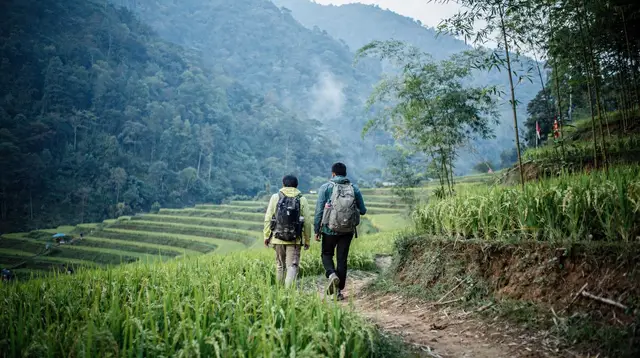
The villages. Walking between hillside settlements, past water buffalo, bamboo and small plots of vegetables, is the heart of a stay here. A guided half-day on foot through the Ta Van and Lao Chai area is a good example, and a two-day trek through the Ta Van and Lao Chai terraces is how many visitors do it. For route detail, see our Sapa trekking guide; I will not repeat the treks here.
The food and the culture. The villages around Sapa are home to several ethnic minority communities, and a short village cooking session is a gentle way to meet local families without hiking for hours. I enjoyed cooking local Sapa dishes on a short village tour more than I expected. If you want to understand who lives in these hills, read about the ethnic minorities of northern Vietnam.
What Sapa does badly
Fog and cold. I will say this plainly: fog and winter cold can ruin the view. Between December and February, mist rolls in and can sit for days. Nights drop close to freezing in some years, and rooms are not always well heated. You can pay for a Fansipan ticket and see nothing but white. If you travel in winter, treat any clear hour as a bonus, not a promise.
Crowds and touts. On busy weekends and holidays the main street is full, and you will be approached repeatedly to buy handicrafts or hire a guide. It is manageable with a polite no, but it is tiring.
Not a heritage site. Sapa is not inscribed by UNESCO, despite what some brochures imply. Its appeal is landscape and village life, not monuments. If heritage matters to you, the northern sites worth the trip are Ha Long Bay and Trang An; see our UNESCO sites in Vietnam page.
When to go
There is no perfect month, only trade-offs. Autumn is the best season: terraces gold in September and October, cooler air and often clearer skies. Late spring and early summer bring green terraces but more rain. Summer is hot in the lowlands, wet in the hills and carries a typhoon risk in the north, roughly July to September; the rainy season and typhoons page explains how that affects travel. Winter is quiet, cold and foggy.
For month-by-month detail, see Vietnam in October and Vietnam in December, or the broader best time to visit Vietnam.
How to get there
Sapa sits in the far north-west, roughly 320 km from Hanoi. There are two sensible ways:
| Option | What to expect |
|---|---|
| Bus or limousine minibus | About five to six hours by road along the expressway to Lao Cai, then uphill to Sapa. Comfortable and frequent. |
| Night train to Lao Cai | Sleeper berths overnight, then a road transfer of about an hour uphill. Atmospheric, but the transfer matters. |
| Private car with driver | Door to door, flexible, more expensive. |
I like the night train for the experience, though a daytime minibus is simply easier. For details on both, see Vietnam train travel and sleeper buses in Vietnam. Start from Hanoi, and allow at least two nights. A day trip from the capital is not realistic.
Who should skip it
If you are short of time and have only a week, Ninh Binh and Ha Long Bay give you more scenery for less transit. If you want wilder, less developed mountains, compare Sapa with the Ha Giang loop in Sapa or Ha Giang. Other highland areas such as Mu Cang Chai and Mai Chau have their own pages, and so does Ha Giang.
If you want to be out of the town for a day without hiking far, a private car trip to the Lonely Tree and a nearby cave is an easy half-day alternative.
My verdict
Sapa is worth it for the valleys, the terraces and the view from a ridge on a clear morning. It is not worth it for the town, for a rushed single day or for a foggy week in January. Choose autumn if you can, give it three days, and spend almost none of them in the centre. See everything on offer on our Sapa destination page.
Frequently asked questions about visiting Sapa
Is Sapa worth visiting in 2026?
Yes, for the landscapes around the town, as long as you accept that the town centre is crowded and commercial. Allow at least two nights and spend your time out in the valleys.
Is Sapa a UNESCO World Heritage Site?
No. Sapa is not inscribed by UNESCO. Vietnam’s World Heritage Sites in the north are Ha Long Bay, the Imperial Citadel of Thang Long in Hanoi and Trang An near Ninh Binh.
How do you get from Hanoi to Sapa?
By road, with a bus or limousine minibus along the expressway to Lao Cai and a transfer uphill, or by night train to Lao Cai followed by a road transfer. Plan roughly five to six hours door to door either way.
What is the best time to visit Sapa?
Autumn, around September to November, is the classic choice, with golden terraces in September and October. Green terraces from about June are also lovely. Winter is cold and often foggy.
Can you see the rice terraces in winter?
You can see the terraced hillsides, but they are bare or flooded rather than green or golden, and fog often hides them. It is the weakest season for views.
Is it worth going up Fansipan?
On a clear day the cable car makes it an easy way to stand on the country’s highest peak at 3,147 m. On a foggy day you may see only white cloud, so check the forecast and stay flexible.
How many days do you need in Sapa?
Two nights is the practical minimum, three if you want a full day in the valleys and a spare day for weather. A single day trip from Hanoi is too rushed.
Trekking and Hiking in the Northern Mountains and Beyond
Verified deep-linked GetYourGuide tours. Book through these links and we earn a small commission at no cost to you.
GetYourGuide does not provide a product photo for this activity — the image shows the meeting point, photographed by us.