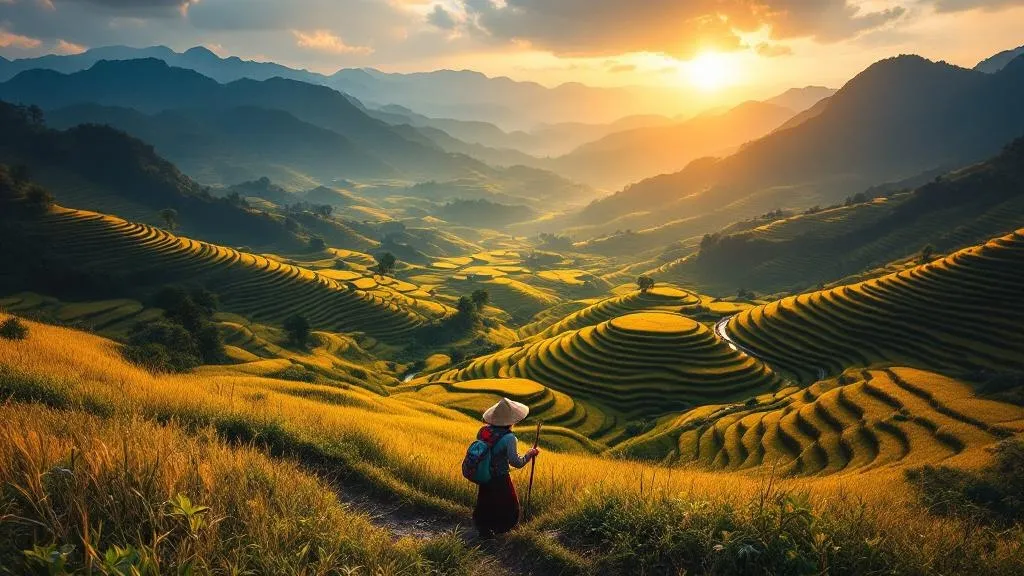
Mu Cang Chai is not a town you tick off. It is a district of steep valleys in the north-west of the country where Hmong and other mountain communities have carved rice paddies into the hillsides, layer on layer, until whole slopes look like contour maps. You come for the terraces, the road that climbs through them and the quiet evenings in a village homestay. If you are looking for a city, a beach or a list of monuments, this is the wrong place. If you want one of the most striking agricultural landscapes in Northern Vietnam, it is one of the best.
A short-season destination, not a city break
The right way to think about Mu Cang Chai is as a seasonal trip built around a single sight. The terraces change with the farming year, and your trip should be planned around that calendar. A visit in the wrong month still gives you mountains and village life, but not the picture that made you book.
The district is spread over several valleys, with villages strung along a mountain road and terraces appearing on both sides. There is no single centre of attraction. Visitors move between viewpoints, stop to walk a path through a village, then return to a simple homestay or guesthouse for dinner.
That scattered layout also explains why a day trip rarely works. By the time you arrive, you have a few hours of light left and you are tired from the road. A night on the spot changes the whole experience.
When to go: green in June, gold in September and October
A single month would be misleading, because the terraces have two distinct looks.
| Period | What you see | Notes |
|---|---|---|
| About June | Young rice, fresh green terraces | Wet season is beginning; mist and showers are common |
| July-August | Deep green, full growth | Hot and humid, with a real typhoon and landslide risk in the north |
| September-October | Golden slopes before and during harvest | The classic postcard season, and the busiest |
| November onwards | Harvested stubble, brown hillsides | Quiet and cool; the terraces are no longer the draw |
The exact week the gold peaks changes every year, and it also changes from valley to valley, because villages plant at different times and altitudes. Treat dates as a window, not a promise. If you can be flexible, give yourself several days of margin or ask your homestay host what the fields look like the week you travel.
Weather matters as much as colour. The north has four seasons, and its summers are hot, very humid and rainy. Heavy rain can make mountain roads slow or occasionally impassable, so read Vietnam’s rainy season and typhoons before booking a July or August trip. Autumn is the best season in the north overall, which is another reason the gold weeks are so popular. For the broader picture of the year, see the best time to visit Vietnam, then compare the month-by-month notes for September and October.
Not Sapa: what makes Mu Cang Chai different
Visitors regularly confuse the two, because both are in the northern mountains and both are known for terraces. They are different places.
- Sapa is a hill town with hotels, restaurants, a busy centre and the base for climbing Fansipan, which you can reach on foot or by cable car.
- Mu Cang Chai has no resort and no Fansipan cable car. It is more isolated, with simple accommodation, and it is spread across a district rather than gathered in one town.
- Heritage status also differs. Mu Cang Chai is not a UNESCO site. Do not expect a ticketed, managed heritage area; the terraces are working farmland.
That last point is worth keeping in mind in the field. Rice paddies are somebody’s livelihood. Stay on paths, never walk on the terrace edges, and ask before photographing people. If you want the town-and-trek experience, head to Sapa, and for a comparison of the two mountain styles see Sapa or Ha Giang.
Getting there from Hanoi
Mu Cang Chai is far enough from the capital that the journey is part of the plan. I will not give you a precise duration, because it varies with the road, the traffic, the weather and where exactly you are going in the district. Count on several hours by road from Hanoi, and expect it to take longer in the rain.
There is no airport and no railway in the district, so the choices come down to road transport:
- Private car with a driver. The most comfortable option, flexible on stops and good for a group or family.
- Organised tour from Hanoi. The simplest for a first visit; transport, a homestay night and local guiding are bundled together. Tours labelled as two days are the norm. One example is a two-day Mu Cang Chai rice terrace tour from Hanoi.
- Sleeper bus or limousine minibus. Possible for independent travellers who want to save money, though schedules change and you should check the current options locally. See Vietnam’s sleeper buses for how these work.
- Motorbike. Rewarding for experienced riders, tiring for everyone else. More on this below.
Whatever you choose, plan an overnight stay in the district. Trying to do Mu Cang Chai as a long day trip from the capital means spending most of your time in a vehicle and arriving at the viewpoints in the wrong light.
What to see: the terraces and the pass
This page deals with the terraces and the road through them. Nothing else is needed to fill two days.
The Khau Pha Pass. The road climbs over a mountain pass that is the main route through the district and the best-known stretch of scenery. Terraces fall away on either side, and on clear days layers of slope stack into the distance. There are pull-outs and viewpoints along the way. Drive slowly, and be careful: the road is narrow, with blind bends, and freight lorries and buses use it. In the harvest season, paragliding flights are offered from the area, weather permitting; ask a local operator for the current arrangements.
La Pan Tan and Che Cu Nha. These are two of the villages most associated with the terraces, and good places to walk rather than just stop. The paths between rice fields give you a different perspective from the road, and you will see farming at close range: buffalo, water channels, stilt houses and drying racks.
The valleys beyond the pass. The further you go from the main viewpoints, the quieter it becomes. Smaller villages have terraces without the tour groups, but facilities are more basic and the roads rougher.
Villages and local life. The mountains are home to Hmong and other ethnic communities, and many families run homestays. A homestay meal in the evening is often the best part of the trip. For context on the communities of the region, read about the ethnic minorities of northern Vietnam, and be respectful about photography and dress when visiting villages.
Walking, riding or driving
How you move through the district shapes the trip.
On foot
Walking is the slowest and most rewarding way. Paths wind between paddies, and a half-day walk lets you see the terraces up close instead of from a roadside. Good shoes with grip matter, especially after rain, because the terrace edges are muddy and slippery. A guide helps with route finding and with talking to villagers. Options include a full-day private trek around Mu Cang Chai or a two-day trek that includes a village stay. If you want the wider trekking picture of the north, see Sapa trekking tours.
By motorbike
The mountain roads are exactly what motorbike riders look for, but they are not forgiving. In Vietnam you need the correct licence to ride, and many insurers refuse a claim if you do not have it. Roads can be wet, covered in gravel or blocked by landslides, and lorries cut corners. If you are not an experienced rider, go pillion with a local easy rider rather than riding yourself.
A guided option is the Mu Cang Chai motorbike adventure to waterfalls and villages. For rental rules and safety, read renting a motorbike in Vietnam and, for the general risk picture on northern mountain loops, is the Ha Giang loop safe.
By car
A car with a driver suits families, older travellers and anyone who prefers to stop for photographs without fatigue. Agree the route and the overnight village before you leave.
Where to stay and eat
Accommodation is mostly small: family homestays, simple guesthouses and a few small hotels. Do not expect a big resort. In the gold weeks of September and October, rooms with the best views book out, so reserve ahead. In the green season you will find more choice and fewer people.
Food is simple and local: rice, grilled meats, vegetables from the garden, and mountain-style soups, usually eaten with the host family. Tell your host about dietary requirements in advance, since choices in remote villages are limited. Bottled or filtered water is the norm, as tap water is not drinkable anywhere in Vietnam.
Nights are cooler than the lowlands, and autumn and winter evenings can be cold, so carry a warm layer. Phone signal and wifi may be patchy.
Money and costs
The cost of a day varies mostly with transport and accommodation. As a guide for 2026, budget about 800,000 to 1,800,000 VND per person per day, roughly 300 to 700 NOK at mid-2026 rates, with the low end covering a homestay, meals and a local ride, and the high end covering a private driver or guided tour. Prices drift with exchange rates, so treat these as indicative.
Bring cash. Cash machines are few outside the district centre, and most homestays and small restaurants prefer notes. For how to handle money across the country, see money in Vietnam and the practical question do you need cash in Vietnam.
Planning a two-day trip
A simple structure works well for most visitors:
| Day | Plan |
|---|---|
| Day 1 | Leave Hanoi early, drive in, stop at viewpoints on the pass, walk one village in the late afternoon, evening meal at the homestay |
| Day 2 | Sunrise or early light on the terraces, a morning walk, return by road to Hanoi |
If you can spare a third day, use it for a longer walk between villages or for the quieter valleys, rather than more driving. Guided two-day options exist for both trekking and riding; one example is a two-day trekking trip focused on local culture.
A word about combining places. Mu Cang Chai fits into a longer northern loop, and your itinerary can link it with Sapa or Mai Chau, which have their own pages: see Sapa and Mai Chau. A broader route is laid out in the northern mountains loop in 10 days. For other terrace regions and the seasons in each, see the rice terraces guide.
Practical tips
- Book accommodation early for September and October.
- Check road conditions after heavy rain; landslides can close or slow roads.
- Dress in layers. Mornings and evenings are cool even when the days are warm.
- Respect the farmland. Do not step onto paddies or trample crops for a photograph.
- Carry cash, a headlamp and a rain jacket.
- Travel insurance should cover mountain roads and, if relevant, motorbike riding.
- Entry rules depend on nationality, so check the official immigration portal before you travel.
Mu Cang Chai questions, answered
When are the Mu Cang Chai rice terraces most beautiful?
There are two peaks. The terraces are green from about June, and they turn gold around September and October, shortly before the harvest. Which one is better is a matter of taste, and the exact timing shifts from year to year with the weather.
Is Mu Cang Chai the same as Sapa?
No. They are different areas of the northern mountains. Sapa is a tourist town below Fansipan with a cable car and many hotels. Mu Cang Chai is a more isolated district of villages and terraces with no resort and no Fansipan cable car.
Is Mu Cang Chai a UNESCO World Heritage Site?
No. Mu Cang Chai is not inscribed by UNESCO. Vietnam’s World Heritage list includes places such as Ha Long Bay, Hoi An and Trang An, but not the northern rice terraces.
How long does it take to get to Mu Cang Chai from Hanoi?
Allow several hours by road, and more in rain or after a landslide. Because of the winding mountain roads, it is not a comfortable day trip, and most visitors sleep at least one night in the district.
How many days do I need in Mu Cang Chai?
Two days with one night is the practical minimum, as it lets you see the terraces at both ends of the day. A third day is worthwhile if you want to walk between villages rather than only stop at viewpoints.
Can I visit Mu Cang Chai without riding a motorbike?
Yes. You can travel by road with a private driver or an organised tour, and walk the terrace paths on foot. If you ride yourself, you need the right licence and insurance cover, and many visitors prefer to ride pillion with a local rider.
Should I bring cash to Mu Cang Chai?
Yes. Homestays, small restaurants and village shops often prefer cash, and cash machines are few outside the district centre. Withdraw dong in Hanoi or a larger town before you go.


